
ISBN
979-13-88142-09-3
Fecha de publicación
18-12-2025
Licencia
D. R. © copyright 2025. Mónica Lorena Sánchez Limón y Yesenia Sánchez Tovar.
Todos los contenidos de esta obra se comparten bajo la licencia Creative Commons Atri-bución/Reconocimiento-NoComercial-CompartirIgual 4.0 Internacional (CC BY-NC-SA 4.0). Esto implica que no está autorizado el uso comercial de la obra original ni de las eventuales obras derivadas, las cuales deberán distribuirse bajo la misma licencia que rige la obra original. No obstante, se permite a terceros compartir el contenido siempre y cuando se reconozca debidamente la autoría y la publicación original en esta editorial.

Yesenia Sánchez Tovar
Universidad Autónoma de Tamaulipas
0000-0002-4299-191X
Cynthia Daniela Torres Sánchez
Universidad Autónoma de Tamaulipas
0009-0008-9020-2699
Virginia Guadalupe López Torres
Universidad Autónoma de Baja California
0000-0002-2795-8951
Acerca de
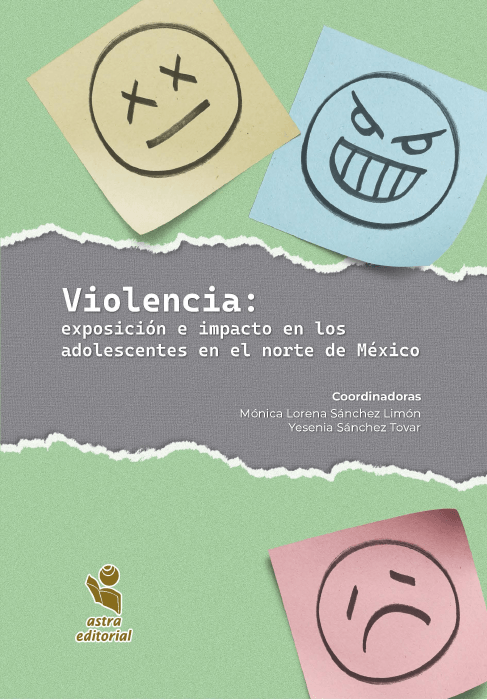
El presente estudio examina cómo la formación ciudadana puede mitigar la violencia en adolescentes, abarcando las interacciones interpersonales, las dinámicas sistémicas y las construcciones culturales que influyen en sus experiencias (Flynn y Mathias, 2023). Este análisis se contextualiza en la adolescencia, un período crucial donde la exposición a diversas formas de violencia interpersonal y sus consecuencias repercuten significativamente en el desarrollo juvenil (Romero-Méndez et al., 2021).
La violencia, en sus múltiples manifestaciones, representa un desafío persistente para la estabilidad social y el desarrollo humano, generando ambientes disfuncionales que fracturan la cultura ciudadana y merman la formación de principios éticos. Este fenómeno complejo no solo socava la cohesión comunitaria, sino que también perpetúa ciclos de conflicto que inhiben el progreso colectivo y la convivencia pacífica. Ante esta problemática, la formación ciudadana emerge como una estrategia fundamental para mitigar la violencia, al fomentar competencias cívicas y éticas que promuevan la resolución pacífica de conflictos y el respeto por los derechos humanos (Reyes, 2020; Romero, 2018).
Referencias
Adams, J., & Mrug, S. (2018). Individual- and school-level predictors of violence perpetration, victimization, and perceived safety in middle and high schools. Journal of School Violence, 18(3), 468. https://doi.org/10.1080/15388220.2018.1528551
Agnihotri, S. (2017). Critical Reflection on the Role of Education as a Catalyst of Peace-building and Peaceful Coexistence. Universal Journal of Educational Research, 5(6), 911. https://doi.org/10.13189/ujer.2017.050601
Albarello, F., Crocetti, E., & Rubini, M. (2017). I and Us: A Longitudinal Study on the Interplay of Personal and Social Identity in Adolescence. Journal of Youth and Adolescence, 47, 689 – 702. https://doi.org/10.1007/s10964-017-0791-4
Alonso, C. C., Hernández, A. J. M., & Vinat, M. F. (2019). Convivencia en el ámbito educativo: aplicación de un programa basado en la empatía, la educación emocional y la resolución de conflictos en un instituto español de enseñanza secundaria. Cuestiones Pedagógicas, 27, 97. https://doi.org/10.12795/cp.2018.i27.06
Alucín, S. (2013). Ciudadanía y Justicia Social: Una Mirada Etnográfica sobre la Educación Secundaria en Argentina. Revista Internacional de Educación Para La Justicia Social, 2(1). https://doi.org/10.15366/riejs2013.2.1.003
Alvarado, K. G. M., León-Reyes, B. B., Aguirre, G. A. R., Cadena, K. A. Á., & Ponce, Y. Y. C. (2024). Violencia Escolar y su Influencia en el Comportamiento: Una Revisión de Estudios. Ciencia Latina Revista Científica Multidisciplinar, 8(3), 5297. https://doi.org/10.37811/cl_rcm.v8i3.11737
Antelo, I. F., Gordillo, I. C., & Parra, G. M.-M. (2020). Synergy between Acceptance of Violence and Sexist Attitudes as a Dating Violence Risk Factor. International Journal of Environmental Research and Public Health, 17(14), 5209. https://doi.org/10.3390/ijerph17145209
Arias-Rivera, S., & García, M. V. H. (2020a). Fundamentos teóricos y factores explicativos de la Violencia filio-parental. Un estudio de Alcance. Anales de Psicología, 36(2), 220. https://doi.org/10.6018/analesps.338881
Armenta, M. F., López-Escobar, A. E., & Díaz-Méndez, S. G. (2003). Predictores de la conducta antisocial juvenil: un modelo ecológico. Estudos de Psicologia (Natal), 8(1), 15. https://doi.org/10.1590/s1413-294×2003000100003
Ata, A. (2019). Fostering Students’ Civic Skills: Education for Sustainable Democracy. Georgia Educational Researcher, 16(1). https://doi.org/10.20429/ger.2019.160107
Awiszus, A., Koenig, M., & Vaisarova, J. (2022). Parenting Styles and Their Effect on Child Development and Outcome. Journal of Student Research. https://doi.org/10.47611/jsrhs.v11i3.3679
Axtell, C., Maitlis, S., & Yearta, S. (1997). Predicting immediate and longer-term transfer of training. Personnel Review, 26, 201-213. https://doi.org/10.1108/00483489710161413
Bandura, A. (1977). Social learning theory. Prentice-Hall.
Baskin-Sommers, A., Simmons, C., Conley, M., Chang, S., Estrada, S., Collins, M., Pelham, W., Beckford, E., Mitchell-Adams, H., Berrian, N., Tapert, S., Gee, D., & Casey, B. (2021). Adolescent civic engagement: Lessons from Black Lives Matter. Proceedings of the National Academy of Sciences of the United States of America, 118. https://doi.org/10.1073/pnas.2109860118
Bermúdez-Urbina, F. M. (2014). “Aquí los maestros no pegan porque ya no se acostumbra”. Expresiones de la violencia hacia las mujeres en la universidad de ciencias y artes de chiapas. Península, 9(2). https://doi.org/10.1016/s1870-5766(14)71798-2
Bonsteel, S. (2012). APA PsycNET. The Charleston Advisor, 14(1), 16. https://doi.org/10.5260/chara.14.1.16
Bronfenbrenner, U. (1979). The ecology of human development: Experiments by nature and design. Harvard University Press.
Calvete, E., Orue, I., & Sampedro, R. J. (2011). Violencia filio-parental en la adolescencia: características ambientales y personales. Journal for the Study of Education and Development Infancia y Aprendizaje, 34(3), 349. https://doi.org/10.1174/021037011797238577
Cancino, G., & Mínguez, A. (2020). La familia y su influencia en la creatividad de los hijos. Revista Sobre la Infancia y la Adolescencia, 20-31. https://doi.org/10.4995/reinad.2020.12839
Carvajal, H. O., Castillo, J., & Carreño, Á. (2020). Los desafíos de la meta 4.7 de la agenda 2030: Un análisis de evidencias desde UNESDOC. Profesorado Revista de Currículum y Formación Del Profesorado, 24(3), 49. https://doi.org/10.30827/profesorado.v24i3.15402
Castro, A., Fozi, A. M., Hung, C., Etoh, M., & Bergin, C. (2025). Civic and Prosocial Decision-Making in Early Adolescents. Youth, 5(2), 33. https://doi.org/10.3390/youth5020033
Cerda, G., Pérez, C., Elipe, P., Casas, J. A., & Rey, R. D. (2018). Convivencia escolar y su relación con el rendimiento académico en alumnado de Educación Primaria. Revista de Psicodidáctica, 24(1), 46. https://doi.org/10.1016/j.psicod.2018.05.001
Cervera, P. Q., & Castilla, M. R. (2021). Paz y ciudadanía en las nuevas generaciones : caso institución educativa ciudad de Tunja. Revista Palobra Palabra Que Obra, 21(1), 174. https://doi.org/10.32997/2346-2884-vol.21-num.1-2021-3494
Chen, X., Kang, J., & Wang, M. (2024). The impact of the community’s sound environment on social interactions among residents. Building and Environment. https://doi.org/10.1016/j.buildenv.2024.112094
Chisholm, J. F. (1998). Understanding Violence in the School: Moral and Psychological Factors. Journal of Social Distress and the Homeless, 7(2), 137. https://doi.org/10.1023/a:1022988314269
Claussen, C., Matejko, E., & Exner‐Cortens, D. (2022). Exploring risk and protective factors for adolescent dating violence across the social-ecological model: A systematic scoping review of reviews. Frontiers in Psychiatry, 13. https://doi.org/10.3389/fpsyt.2022.933433
Colpas, P. P. A., Tapias, B. A. H., Sánchez-Comas, A., Piñeres-Melo, M. A., & Royert, J. C. M. (2020). Aula Touch Game: Digital Tablets and Their Incidence in the Development of Citizen Competences of Middle Education Students in the District of Barranquilla-Colombia. In Lecture notes in computer science (p. 537). Springer Scienc Business Media. https://doi.org/10.1007/978-3-030-53956-6_49
Commodari, E., La Rosa, V., Sagone, E., & Indiana, M. (2022). Interpersonal Adaptation, Self-Efficacy, and Metacognitive Skills in Italian Adolescents with Specific Learning Disorders: A Cross-Sectional Study. European Journal of Investigation in Health, Psychology and Education, 12, 1034 – 1049. https://doi.org/10.3390/ejihpe12080074
Coronado-Peña, J. J., Estrada-Mosquera, Á. A., & Torres-Mosquera, L. N. (2021). Experiencia multicultural y su relación con la convivencia escolar. Cultura Educación y Sociedad, 12(1), 341. https://doi.org/10.17981/cultedusoc.12.1.2021.22
Cortázar, A. R. G. de, Calo, I. G., & Bueno, C. G. (2024). What Is the Patriarchy Doing in Our Bed? Violent Sexual-Affective Experiences Among Youth. Sexuality Research and Social Policy. https://doi.org/10.1007/s13178-024-00956-x
Cuxart, M. P., Molina, S., González, E. G., & Tellado, I. (2021). Evidence of Gender Violence Negative Impact on Health as a Lever to Change Adolescents’ Attitudes and Preferences towards Dominant Traditional Masculinities. International Journal of Environmental Research and Public Health, 18(18), 9610. https://doi.org/10.3390/ijerph18189610
Daoud, N., Carmi, A., Bolton, R., Cerdán-Torregrosa, A., Nielsen, A., Alfayumi‐Zeadna, S., Edwards, C., Súilleabháin, F. Ó., Sanz‐Barbero, B., Vives‐Cases, C., & Salazar, M. (2022). Promoting Positive Masculinities to Address Violence Against Women: A Multicountry Concept Mapping Study. Journal of Interpersonal Violence, 38, 6523. https://doi.org/10.1177/08862605221134641
Deniz, A., & Kan, S. (2025). Teachers’ Perspectives on Bullying Behaviors in Value-Based School Culture. Journal of Posthumanism. https://doi.org/10.63332/joph.v5i5.1537
Díaz-Vargas, C., Tapia-Figueroa, A., Valdebenito-Villalobos, J., Gutiérrez-Echavarria, M., Acuña-Zúñiga, C., Parra, J., Arias, A., Castro-Durán, L., Chávez-Castillo, Y., Cristi‐Montero, C., Zapata-Lamana, R., Parra-Rizo, M., & Cigarroa, I. (2023). Academic Performance according to School Coexistence Indices in Students from Public Schools in the South of Chile. Behavioral Sciences, 13. https://doi.org/10.3390/bs13020154
Ding, J. (2024). Family as a necessary social institution in the process of socialization. Social pedagogy: theory and practice. https://doi.org/10.12958/1817-3764-2024-4-30-35
Eldin, N., Mohamed, N., Farrag, N., & Elsheikh, E. (2025). The Effect of Civic Engagement on Mental Health and Behaviors among Adolescents. Medicine Updates. https://doi.org/10.21608/muj.2025.348094.1197
Ellonen, N., Pasanen, M., Wiss, K., Mielityinen, L., Lähteenmäki, E., & Joronen, K. (2022). Health Promotion Actions and School Violence—A Cluster Analysis from Finnish Comprehensive Schools. International Journal of Environmental Research and Public Health, 19(19), 12698. https://doi.org/10.3390/ijerph191912698
Epstein, J. (2018). School, family, and community partnerships in teachers’ professional work. Journal of Education for Teaching, 44, 397 – 406. https://doi.org/10.1080/02607476.2018.1465669
Escobar, J. C., Benítez, A. C. M., Mena, S. C. M., Guerrero, C. M., & Maury, A. (2023). La prosocialidad: estrategia de educación integral frente a la violencia. Revista Latinoamericana de Ciencias Sociales Niñez y Juventud, 22(1), 1. https://doi.org/10.11600/rlcsnj.22.1.5681
Estudillo, M. D. L. C., & García, P. P. (2023). Desarrollo de la competencia intercultural: una revisión bibliográfica. Modulema. Revista Científica Sobre Diversidad Cultural, 7, 101. https://doi.org/10.30827/modulema.v7i.28763
Felson, R., Liska, A., South, S., & McNulty, T. (1994). The Subculture of Violence and Delinquency: Individual vs. School Context Effects. Social Forces, 73, 155-173. https://doi.org/10.1093/SF/73.1.155
Flores, H. G. H., & Calva, J. M. L. (2014). La participación estudiantil como estrategia de formación ciudadana para la educación en valores en el nivel superior. Revista de Comunicación de La SEECI, 43. https://doi.org/10.15198/seeci.2014.35e.43-58
Flynn, K., & Mathias, B. (2023). “How Am I Supposed to Act?”: Adapting Bronfenbrenner’s Ecological Systems Theory to Understand the Developmental Impacts of Multiple Forms of Violence. Journal of Adolescent Research. https://doi.org/10.1177/07435584231159674
Francés, I. L., & Tapía, P. (2019). Violencia Machista en las aulas de las universidades. Cuestiones Pedagógicas, 27, 53. https://doi.org/10.12795/cp.2018.i27.04
Frederico, M., & Whiteside, M. (2016). Building School, Family, and Community Partnerships: Developing a Theoretical Framework. Australian Social Work, 69, 51 – 66. https://doi.org/10.1080/0312407X.2015.1042488
Fuentes-Moreno, C., Sabariego-Puig, M., & Ambrós-Pallarés, A. (2020). Developing social and civic competence in secondary education through the implementation and evaluation of teaching units and educational environments. Humanities and Social Sciences Communications, 7. https://doi.org/10.1057/s41599-020-0530-4
Galdo-Castiñeiras, J. A., Morante, J. J. H., Moreno, I. M., & Pérez, P. E. (2023). Educational Intervention to Decrease Justification of Adolescent Dating Violence: A Comparative Quasi-Experimental Study. Healthcare, 11(8), 1156. https://doi.org/10.3390/healthcare11081156
García, M., & Madriaza, P. (2005). Sentido y Sinsentido de la Violencia Escolar: Análisis Cualitativo del Discurso de Estudiantes Chilenos. Psykhe (Santiago), 14(1). https://doi.org/10.4067/s0718-22282005000100013
García-Carrión, R., Molina-Luque, F., & Roldán, S. (2018). How do vulnerable youth complete secondary education? The key role of families and the community. Journal of Youth Studies, 21, 701 – 716. https://doi.org/10.1080/13676261.2017.1406660
Garner, P. (2013). Dimensions of school-based violence to and by children: an overview of recent literature. International Journal of Adolescence and Youth, 19(4), 484. https://doi.org/10.1080/02673843.2012.751043
Genner, S., & Süss, D. (2017). Socialization as Media Effect., 4, 1-15. https://doi.org/10.1002/9781118783764.WBIEME0138
Gomes, H. M., & Lobato, V. da S. (2021). Conflito escolar, diálogo e mediação de conflitos: interseções e contribuições pós-pandemia. Revista Mbienteeducação, 555. https://doi.org/10.26843/v14.n3.2021.1075.p555-579
Gordillo, I. C., & Parra, G. M.-M. (2021). Gender-Based Violence in Adolescent Dating from a Medical Perspective: A Qualitative Study of the Needs Felt in Primary Healthcare Centres. Healthcare, 10(1), 17. https://doi.org/10.3390/healthcare10010017
Gorman‐Smith, D. (2012). Violence Prevention and Students with Disabilities: Perspectives from the Field of Youth Violence Prevention. Behavioral Disorders, 37(3), 210. https://doi.org/10.1177/019874291203700308
Graham, L. M., Embry, V., Young, B.-R., Macy, R. J., Moracco, K. E., Reyes, H. L. M., & Martin, S. L. (2019). Evaluations of Prevention Programs for Sexual, Dating, and Intimate Partner Violence for Boys and Men: A Systematic Review. Trauma Violence & Abuse, 22(3), 439. SAGE Publishing. https://doi.org/10.1177/1524838019851158
Griffiths, H., Keirns, N., Strayer, E., Sadler, T., Cody‐Rydzewski, S., Scaramuzzo, G., Vyain, S., Bry, J., & Jones, F. (2021). Agents of Socialization: Gente como Uno. https://doi.org/10.2307/j.ctv26rr9wz.7
Gultom, R. (2024). Citizenship Education in Elementary Schools (Foundations for Personality Development of Future Citizens). International Journal of Students Education. https://doi.org/10.62966/ijose.vi.777
Hair, J. F., Anderson, R. E., Tatham, R. L., & Black, W. C. (2010). Análisis multivariante. Pearson Prentice Hall.
Hair Jr, J. F., M Hult, G. T., M Ringle, C., Sarstedt, M., Castillo Apraiz, J., Cepeda Carrión, G. A., & Roldán, J. L. (2017). Manual de partial least squares structural equation modeling (PLS-SEM). OmniaScience.
Hampden-Thompson, G., & Galindo, C. (2017). School–family relationships, school satisfaction and the academic achievement of young people. Educational Review, 69, 248 – 265. https://doi.org/10.1080/00131911.2016.1207613
Hargie, O. (2021). Skilled Interpersonal Communication. Skilled Interpersonal Communication: Research, Theory and Practice. https://doi.org/10.4324/9781003182269
Henríquez, P., M, A. D., Pérez, M. V. H., P, M. T., & A, M. V. (2008). Agresión y violencia en la escuela como factor de riesgo del aprendizaje escolar. Ciencia y Enfermería/Ciencia y Enfermería, 14(2). https://doi.org/10.4067/s0717-95532008000200004
Herrala, J. (2021). Interpersonal Skills. The Ultimate Medical School Rotation Guide. https://doi.org/10.1002/9781118785317.weom110174
Hong, J. S., & Espelage, D. L. (2012). A review of research on bullying and peer victimization in school: An ecological system analysis [Review of A review of research on bullying and peer victimization in school: An ecological system analysis]. Aggression and Violent Behavior, 17(4), 311. Elsevier BV. https://doi.org/10.1016/j.avb.2012.03.003
Horner, S., Bhattacharyya, S., & O’Connor, E. (2008). Modeling: It’s More than Just Imitation. Childhood Education, 84, 219 – 222. https://doi.org/10.1080/00094056.2008.10523010
Huang, D., Feng, R., & Shi, M. (2024). Does the community service environment affect the willingness of older adults people to socialize for older adults care?. Frontiers in Public Health, 12. https://doi.org/10.3389/fpubh.2024.1370808
Israel, G., Beaulieu, L., & Hartless, G. (2009). The Influence of Family and Community Social Capital on Educational Achievement. Rural Sociology, 66, 43-68. https://doi.org/10.1111/J.1549-0831.2001.TB00054.X
James, K., Bunch, J., & Clay-Warner, J. (2015). Perceived Injustice and School Violence. Youth Violence and Juvenile Justice, 13, 169 – 189. https://doi.org/10.1177/1541204014521251
Jerome, L., Hyder, F., Hilal, Y., & Kisby, B. (2024). A systematic literature review of research examining the impact of citizenship education on active citizenship outcomes. Review of Education. https://doi.org/10.1002/rev3.3472
Jiménez, C. P. (2008). La convivencia social como proyecto político colectivo. Utopía y Praxis Latinoamericana: Revista Internacional de Filosofía Iberoamericana y Teoría Social, 13(42), 107. https://dialnet.unirioja.es/descarga/articulo/2731250.pdf
Keating, A., & Janmaat, J. (2016). Education Through Citizenship at School: Do School Activities Have a Lasting Impact on Youth Political Engagement?. Parliamentary Affairs, 69, 409-429. https://doi.org/10.1093/PA/GSV017
Kelty, N., & Wakabayashi, T. (2020). Family Engagement in Schools: Parent, Educator, and Community Perspectives. SAGE Open, 10. https://doi.org/10.1177/2158244020973024
Khanum, S., Mushtaq, R., Kamal, M., Nishtar, Z., & Lodhi, K. (2023). The Influence of Parenting Styles on Child Development. Journal of Policy Research. https://doi.org/10.61506/02.00022
Khoury‐Kassabri, M., Zadok, I., Eseed, R., & Vazsonyi, A. T. (2020). Individual and familial factors as mediators and moderators of young children’s aggressive behavior. Children and Youth Services Review, 118, 105428. https://doi.org/10.1016/j.childyouth.2020.105428
Knafo, A., Daniel, E., & Khoury-Kassabri, M. (2008). Values as protective factors against violent behavior in Jewish and Arab high schools in Israel. Child development, 79 3, 652-67 . https://doi.org/10.1111/j.1467-8624.2008.01149.x
Kröyer, Ó. N., Guzmán, J. V., Aguayo, J. G., Viejo, C., Salinas, R., & Torres, G. R. (2017). Estudio de casos: tensiones y desafíos en la elaboración de la normativa escolar en Chile. Educação e Pesquisa, 44. https://doi.org/10.1590/s1678-4634201711167834
Lane, A. M. (2025). CALM: Cultivating Awareness, Learning, and Mastery to Reduce Anger and Violence Through Combat Sports. Youth, 5(2), 45. https://doi.org/10.3390/youth5020045
Lee, C. (2010). An Ecological Systems Approach to Bullying Behaviors Among Middle School Students in the United States. Journal of Interpersonal Violence, 26(8), 1664. https://doi.org/10.1177/0886260510370591
Lehmann‐Willenbrock, N. (2024). Dynamic Interpersonal Processes at Work: Taking Social Interactions Seriously. Annual Review of Organizational Psychology and Organizational Behavior. https://doi.org/10.1146/annurev-orgpsych-110622-035421
León, C. M., & Aizpurúa, E. (2023). Do Youth Dream of Gender Stereotypes? The Relationship among Gender Stereotyping, Support for Feminism, and Acceptance of Gender-Based Violence. International Journal of Environmental Research and Public Health, 20(3), 2439. https://doi.org/10.3390/ijerph20032439
Leyton-Leyton, I. (2020). Convivencia escolar en Latinoamérica: una revisión de literatura latinoamericana (2007-2017). Revista Colombiana de Educación, 80, 227. https://doi.org/10.17227/rce.num80-8219
López, D., Llor-Esteban, B., Ruiz-Hernández, J., Luna-Maldonado, A., & Puente-López, E. (2021). Attitudes Towards School Violence: A Qualitative Study With Spanish Children. Journal of Interpersonal Violence, 37, NP10782 – NP10809. https://doi.org/10.1177/0886260520987994
Lundgren, R., & Amin, A. (2014). Addressing Intimate Partner Violence and Sexual Violence Among Adolescents: Emerging Evidence of Effectiveness [Review of Addressing Intimate Partner Violence and Sexual Violence Among Adolescents: Emerging Evidence of Effectiveness]. Journal of Adolescent Health, 56(1). Elsevier BV. https://doi.org/10.1016/j.jadohealth.2014.08.012
Makleff, S., Garduño, J., Zavala, R. I., Barindelli, F., Valades, J., Billowitz, M., Márquez, V. I. S., & Marston, C. (2019). Preventing Intimate Partner Violence Among Young People—a Qualitative Study Examining the Role of Comprehensive Sexuality Education. Sexuality Research and Social Policy, 17(2), 314. https://doi.org/10.1007/s13178-019-00389-x
Martínez-Líbano, J. (2022). Relación entre la Percepción de Padres y Madres Respecto a la Violencia Escolar y las Competencias Sociales de sus Hijos dentro del Contexto Educacional Chileno. ReiDoCrea Revista Electrónica de Investigación Docencia Creativa. https://doi.org/10.30827/digibug.76317
Martínez-Valderrey, V., Mediavilla, M. G., Villasana-Terradillos, M., & Alguacil, S. (2023). Editorial: Bullying, cyberbullying, and dating violence: State of the art, evaluation instruments, and prevention and intervention proposals. Frontiers in Psychology, 14. https://doi.org/10.3389/fpsyg.2023.1119976
McConnell, C. (2018). Interpersonal Competence in the Management of People. The Health Care Manager, 37, 358–367. https://doi.org/10.1097/HCM.0000000000000237
Medina-Maldonado, V., Bravo, M. del M. P., Vargas, E., Francisco, J., & Jiménez‐Ruiz, I. (2021). Adolescent Dating Violence: Results of a Mixed Study in Quito, Ecuador. Journal of Interpersonal Violence, 37. https://doi.org/10.1177/08862605211001471
Meléndez‐Torres, G. J., Bonell, C., Shaw, N., Orr, N., Chollet, A., Rizzo, A. J., Rigby, E., Hagell, A., Young, H., Berry, V., Humphreys, D. K., & Farmer, C. (2023). Are school-based interventions to prevent dating and relationship violence and gender-based violence equally effective for all students? Systematic review and equity analysis of moderation analyses in randomised trials. Preventive Medicine Reports, 34, 102277. Elsevier BV. https://doi.org/10.1016/j.pmedr.2023.102277
Méndez-López, C., Pereda, N., & Guilera, G. (2020). Lifetime poly-victimization and psychopathological symptoms in Mexican adolescents. Child Abuse & Neglect, 112, 104883. https://doi.org/10.1016/j.chiabu.2020.104883
Mendoza, A. T., Grima, V. M. P., Nabel, L. C. T., & Maestro, I. T. (2023). El deterioro del tejido escolar en escuelas secundarias desde la visión de algunos investigadores. Diálogos Sobre Educación, 27. https://doi.org/10.32870/dse.v0i27.1259
Mendoza, L. P. (2019). Self-esteem workshop “Learning to value myself, value the others” for the life skills of the students of Primay Education. SCIÉNDO, 22(1), 15. https://doi.org/10.17268/sciendo.2019.002
Mendoza, L. P. (2019). Self-esteem to develop skills for life in university students of Primary Education. SCIÉNDO, 22(3), 181. https://doi.org/10.17268/sciendo.2019.023
Messaoudi, I., & Sakale, S. (2024). Interpersonal Skills: A Gateway to Emotional Intelligence in the Workplace. International Journal of English Language Studies. https://doi.org/10.32996/ijels.2024.6.2.25
Moolman, B., Essop, R., & Tolla, T. (2020). Navigating agency: adolescents’ challenging dating violence towards gender equitable relationships in a South African township. South African Journal of Psychology, 50(4), 540. https://doi.org/10.1177/0081246320934363
Moreno, C. F., Puig, M. S., & Pallarès, A. A. (2020). Developing social and civic competence in secondary education through the implementation and evaluation of teaching units and educational environments. Humanities and Social Sciences Communications, 7(1). https://doi.org/10.1057/s41599-020-0530-4
Moreno, F. J. B., Herrera-López, M., & Rodríguez‐Hidalgo, A. J. (2021). Las habilidades socio-emocionales para la mediación escolar: una revisión sistemática. Revista Boletín Redipe, 10(6), 171. https://doi.org/10.36260/rbr.v10i6.1318
Moreno-Manso, J., Blázquez-Alonso, M., García‐Baamonde, M., Guerrero-Barona, E., & Pozueco-Romero, J. (2014). Gender as an Explanatory Factor of Psychological Abuse in Dating Couples. Journal of Social Service Research, 40, 1 – 14. https://doi.org/10.1080/01488376.2013.842951
Moropa, T., Matshaka, L., & Makhene, A. (2025). Enhancing effective interpersonal interactions through soft skills: perceptions of nurse educators. BMC Nursing, 24. https://doi.org/10.1186/s12912-025-02864-w
Murta, S. G., Parada, P. de O., Meneses, S. da S., Medeiros, J. V. V., Balbino, A. M., Rodrigues, M. C., Miura, M. A., Santos, T. A. A. dos, & Vries, H. de. (2020). Dating SOS: a systematic and theory-based development of a web-based tailored intervention to prevent dating violence among Brazilian youth. BMC Public Health, 20(1). https://doi.org/10.1186/s12889-020-08487-x
Nunnally, J. C. (1975). Psychometric Theory-25 Years Ago and Now. Educational Researcher, 4(10), 7-21. https://doi.org/10.3102/0013189X004010007
Núñez, L. A. H. (2023). La interculturalidad en el desarrollo de la tutoría para la convivencia escolar en instituciones educativas de nivel secundario, Cusco -2023. Revista de Climatología, 23, 2925. https://doi.org/10.59427/rcli/2023/v23cs.2925-2929
O’Donnell, S., Taylor, P., Vincent, C. D., Scott‐Storey, K., Wuest, J., & Malcolm, J. (2024). Masculinity and Violence Interconnectedness: Defining and Reconciling the Gender Paradox Among Men With Cumulative Lifetime Violence Histories. SAGE Open, 14(3). https://doi.org/10.1177/21582440241266998
Ochoa, D. C. (2022). Representaciones sociales de la masculinidad en un grupo de hombres agresores de mujeres. RHS-Revista Humanismo y Sociedad, 10(2). https://doi.org/10.22209/rhs.v10n2a07
Oslé, J. (2023). Digital socialization in media and youth: challenges to psychology. Child in a Digital World. https://doi.org/10.61365/forum.2023.055
Ovejas, I. S., Gurría, M. I., & Martínez-García, A. (2025). Study of the concept and dimensions of gender-based violence and its connection to adolescence and its link to education. 2(2), 2021. https://doi.org/10.59400/ephr2021
Özbey, A. (2021). An Investigation of the Democratic Values, Problem-Solving Skills, and Attitude Levels toward Violence of Secondary School Students. International journal of social science studies, 9, 66-81. https://doi.org/10.11114/IJSSS.V9I3.5220
Padilla, P. C., & Evans, M. C. F. (2019). Convivencia Escolar: Una revisión del concepto. Psicoperspectivas Individuo y Sociedad, 18(1). https://doi.org/10.5027/psicoperspectivas-vol18-issue1-fulltext-1486
Pantoja, S. R. (2011). Escuela e identidad: Un desafío docente para la cohesión social. Polis (Santiago), 10(30), 447. https://doi.org/10.4067/s0718-65682011000300021
Parsons, T. (1959). The school class as a social system: Some of its functions in American society. Harvard Educational Review, 29(4), 297–318.
Patierno, N. (2020). Violencia y autoridad en la escuela secundaria. Perfiles Educativos, 42(168), 10. https://doi.org/10.22201/iisue.24486167e.2020.168.59221
Peguero, A. A., Connell, N. M., & Hong, J. S. (2016). Introduction to the Special Issue “School Violence and Safety.” Youth Violence and Juvenile Justice, 16(2), 119. https://doi.org/10.1177/1541204016680404
Pérez, C. Y. S. (2017). El Acoso y violencia escolar en el sistema de educación nacional. Revista Electrónica Sinergias Educativas, 2(1). https://doi.org/10.31876/s.e.v2i1.21
Pérez‐Jorge, D., Alonso-Rodríguez, I., Arriagada-Venegas, M., & Ariño-Mateo, E. (2023). Restorative methods as a strategy for the prevention of violence and bullying in primary and secondary schools in Mexico: An exploratory study. Heliyon, 9(7). https://doi.org/10.1016/j.heliyon.2023.e18267
Pérez‐Martínez, V., Marcos‐Marcos, J., Cerdán-Torregrosa, A., Briones‐Vozmediano, E., Sanz‐Barbero, B., Davó-Blanes, M. C., Daoud, N., Edwards, C., Salazar, M., Parra‐Casado, D. L., & Vives‐Cases, C. (2021). Positive Masculinities and Gender-Based Violence Educational Interventions Among Young People: A Systematic Review. Trauma Violence & Abuse, 24(2), 468. SAGE Publishing. https://doi.org/10.1177/15248380211030242
Perkins, S. C. (2011). An ecological perspective on the comorbidity of childhood violence exposure and disabilities: Focus on the ecology of the school. Psychology of Violence, 2(1), 75. https://doi.org/10.1037/a0026137
Phinla, W., Phinla, W., & Mahapoonyanont, N. (2025). How to Promote 21st-Century Skills through Community-Driven Social Studies Education. https://doi.org/10.31124/advance.175024153.32528972/v1
Picón, P. E. C., & Correa, L. J. H. (2023). Educación y democracia: la escuela como espacio de construcción ciudadana. Academia y Virtualidad, 16(2), 27. https://doi.org/10.18359/ravi.5923
Pinochet, S., & Mercado-Guerra, J. (2021). Ideas de las comunidades educativas sobre la ciudadanía democrática en el contexto de pandemia en Chile: una mirada desde las contribuciones de Joan Pagès. REIDICS. Revista de Investigación en Didáctica de las Ciencias Sociales. https://doi.org/10.17398/2531-0968.08.72
Pintado, I. S., Llamazares, M. del C. E., & Delgado-Sánchez-Mateos, J. (2022). Pilot Study on the Effects of the Teaching Interpersonal Skills Program for Teens Program (PEHIA). Frontiers in Psychology, 13. https://doi.org/10.3389/fpsyg.2022.764926
Ponce, R., Sarmiento, Á. S., & Bertolín, A. G. (2020). La educación para la ciudadanía: una urgencia educativa para el siglo XXI. Educação & Sociedade, 41. https://doi.org/10.1590/es.225347
Prati, G., Mazzoni, D., Guarino, A., Albanesi, C., & Cicognani, E. (2020). Evaluation of an Active Citizenship Intervention Based on Youth-Led Participatory Action Research. Health Education & Behavior, 47, 894 – 904. https://doi.org/10.1177/1090198120948788
Puscas, L., Kogan, J., & Holmboe, E. (2021). Assessing Interpersonal and Communication Skills.. Journal of graduate medical education, 13 2 Suppl, 91-95 . https://doi.org/10.4300/JGME-D-20-00883.1
Quezada-Carrasco, P., Zambrano, V. V., & Millán, S. Q. (2022). Interculturalidad en la Educación Técnica Profesional: Tensiones y Desafíos para su Implementación. Revista de Estudios y Experiencias en Educación, 21(47), 387. https://doi.org/10.21703/0718-5162202202102147021
Quiñones, C., & Navarro, A. (2022). A 10 year (2011-2021) systematic review of teen dating violence prevention programs. DOAJ (DOAJ: Directory of Open Access Journals), 14(3). https://doi.org/10.5249/jivr.v14i3.1739
Quiroga, J. F. C., Guzmán, M. L. B., Chilan, S. A. A., Rodríguez, M. M., & Flores, M. (2023). Violencia de género: una revisión sistemática sobre la gestión tutorial, 2015-2023. Ciencia Latina Revista Científica Multidisciplinar, 7(2), 11230. https://doi.org/10.37811/cl_rcm.v7i2.6210
Racionero-Plaza, S., Tellado, I., Aguilera, A., & Prados, M. C. (2021). Gender violence among youth: an effective program of preventive socialization to address a public health problem. AIMS Public Health, 8(1), 66. https://doi.org/10.3934/publichealth.2021005
Ragelienė, T. (2016). Links of Adolescents Identity Development and Relationship with Peers: A Systematic Literature Review.. Journal of the Canadian Academy of Child and Adolescent Psychiatr. Journal de l’Academie canadienne de psychiatrie de l’enfant et de l’adolescent, 25 2, 97-105 .
Rančić, J. (2022). The role of digital media in the socialization of children. CM: Communication and Media. https://doi.org/10.5937/cm17-32342
Reyes, M. M. (2020). La violencia como mecanismo de resolución de conflictos en entornos urbano-populares. Relaciones Estudios de Historia y Sociedad, 41(161), 26. https://doi.org/10.24901/rehs.v41i161.693
Robles-Haydar, C. A., Martínez‐González, M. B., Flórez-Niño, Y. A., Ibáñez-Navarro, L. M., & Amar-Amar, J. J. (2021). Personal and Environmental Predictors of Aggression in Adolescence. Brain Sciences, 11(7), 933. https://doi.org/10.3390/brainsci11070933
Romanovskii, G. (2024). Traditional Mechanisms of Culture Transmission at the Present State of Society. Communicology. https://doi.org/10.21453/2311-3065-2024-12-1-165-173
Romero, E. L. M. (2018). Cultura ciudadana para la resolución pacífica de conflictos saberes y prácticas que la fortalecen. Análisis, 50, 239. https://doi.org/10.15332/21459169.3544
Romero-Méndez, C. A., Rojas-Solís, J. L., & Amador, L. M. G. (2021). Co-ocurrencia de distintos tipos de violencia interpersonal en adolescentes mexicanos. Pedagogia Social Revista Interuniversitaria, 38. https://doi.org/10.7179/psri_2021.38.09
Rubia, J. M. de la, & Basurto, S. R. (2016). Machismo, victimización y perpetración en mujeres y hombres mexicanos. Estudios Sobre Las Culturas Contemporáneas, 22(43), 37. http://culturascontemporaneas.com/contenidos/03%20Machismo.pdf
Santamaría-Villar, M. B., Corbí, R. G., Pozo-Rico, T., & Costa, J. L. C. (2021). Teaching Socio-Emotional Competencies Among Primary School Students: Improving Conflict Resolution and Promoting Democratic Co-existence in Schools. Frontiers in Psychology, 12. https://doi.org/10.3389/fpsyg.2021.659348
Silva, B. O. da, Araújo, A. L. de, Júnior, R. A. de O. F., & Pinheiro, R. R. R. L. de M. P. (2022). Bases da cultura da violência vivenciada por adolescentes do sistema socioeducativo do rio grande do norte. Interfaces Científicas – Humanas e Sociais, 9(2), 715. https://doi.org/10.17564/2316-3801.2021v9n2p715-730
Skřivánková, P., Páv, M., Faberová, K., Perkins, D., Boukalová, H., Adam, D., Mazouchová, A., Gillernová, I., Anders, M., & Kitzlerová, E. (2023). Violence risk and personality assessment in adolescents by Structured Assessment of Violence Risk in Youth (SAVRY) and high school personality questionnaire (HSPQ): Focus on protective factors strengthening. Frontiers in Psychiatry, 13. https://doi.org/10.3389/fpsyt.2022.1067450
Sukumaran, P., & Balakrishna, B. (2021). Parenting styles and social-emotional development of preschool children. International Journal of Contemporary Pediatrics. https://doi.org/10.18203/2349-3291.ijcp20214534
Sumiyardana, K. (2017). SOSIALISASI NILAI-NILAI KULTURAL DALAM KELUARGA Studi Perbandingan Sosial-Budaya Bangsa-Bangsa. , 7. https://doi.org/10.14710/SABDA.7.1.%P
Sun, L. (2023). A narrative inquiry of the intergenerational transmission of cultural family values in mainland China. Journal of Beliefs & Values, 46, 65 – 81. https://doi.org/10.1080/13617672.2023.2241289
Tanti, C., Stukas, A., Halloran, M., & Foddy, M. (2011). Social identity change: shifts in social identity during adolescence. Journal of adolescence, 34 3, 555-67 . https://doi.org/10.1016/j.adolescence.2010.05.012
Tarrant, M. (2002). Adolescent Peer Groups and Social Identity..Social Development, 11, 110-123. https://doi.org/10.1111/1467-9507.00189
Thompson, S. (2008). Social Learning Theory, 1874-1875. https://doi.org/10.1002/9780470373699.SPECED1930
Tian, Y., & Zhang, Z. (2022). School Violence: Causes, Impacts and Solutions (p. 545). https://doi.org/10.2991/978-2-494069-13-8_64
Trommsdorff, G. (2009). Intergenerational Relations and Cultural Transmission. , 126-160. https://doi.org/10.1017/CBO9780511804670.008
Tuhuteru, L., Syekh, I., & Cirebon, N. (2023). The Role Of Citizenship Education In Efforts To Instill Democratic Values. International Journal Of Humanities Education and Social Sciences (IJHESS). https://doi.org/10.55227/ijhess.v2i4.361
Vasiljevic, Z., Pauwels, L., Nilsson, E., Shannon, D., & Svensson, R. (2023). Do Moral Values Moderate the Relationship Between Immigrant-School Concentration and Violent Offending? A Cross-Level Interaction Analysis of Self-Reported Violence in Sweden. Deviant Behavior, 45, 836 – 846. https://doi.org/10.1080/01639625.2023.2266550
Vázquez, C. P., & Guzmán, E. R. (2025). Violencia en el noviazgo adolescente. Una revisión sistemática. European Public & Social Innovation Review, 10, 1. https://doi.org/10.31637/epsir-2025-1259
Vigil, M. Á. G. (2023). Estudio exploratorio sobre los factores relacionados con la competencia intercultural y el diálogo interreligioso en adolescentes en un contexto multicultural. ReiDoCrea Revista Electrónica de Investigación Docencia Creativa. https://doi.org/10.30827/digibug.85863
Villardón-Gallego, L., García‐Cid, A., Estévez, A., & García-Carrión, R. (2023). Early Educational Interventions to Prevent Gender-Based Violence: A Systematic Review [Review of Early Educational Interventions to Prevent Gender-Based Violence: A Systematic Review]. Healthcare, 11(1), 142. Multidisciplinary Digital Publishing Institute. https://doi.org/10.3390/healthcare11010142
Villareal, E. R. D. los R., Vicente, O. R. S., & Cruz, I. A. V. (2023). Civic Education as a Sustainable Value in the Formation of Citizens. Open Journal of Social Sciences, 11(4), 399. https://doi.org/10.4236/jss.2023.114028
Vinasco, I. C. A. (2018). Ambientes escolares: un espacio para el reconocimiento y respeto por la diversidad. Sophia, 14(2), 84. https://doi.org/10.18634/sophiaj.14v.2i.852
Walsh, R. (2023). Social Selves and Social Others in Adolescent Development. . https://doi.org/10.5463/thesis.360
Yang, S., & Oh, E. (2024). Analysis of Children’s Development Pathways based on Bronfenbrenner’s Ecological Systems Theory. International Journal of Education and Humanities, 16(3), 250. https://doi.org/10.54097/vaap3p97
Zahra, S., Saleem, S., Subhan, S., & Mahmood, Z. (2020). Interpersonal skills scale: Development and validation in urbanized sample of adolescents. Social Development. https://doi.org/10.1111/sode.12475
Zheng, J. (2025). The Effects of Parenting Styles on Children’s Emotional and Social Skill Development: The Mediating Role of Emotion Regulation Skills. Lecture Notes in Education Psychology and Public Media. https://doi.org/10.54254/2753-7048/2025.20550
Zwack, M., Kraiczy, N., Von Schlippe, A., & Hack, A. (2016). Storytelling and cultural family value transmission: Value perception of stories in family firms. Management Learning, 47, 590 – 614. https://doi.org/10.1177/1350507616659833