
ISBN
Formato digital
979-13-88142-88-8
Fecha de publicación
20-04-2026
Licencia
D. R. © copyright 2026. Norma Delia Zazueta Torres, Luz Llarely Cá-zarez Flores, Aurelia Mendoza Gómez.
Todos los contenidos de esta obra se comparten bajo la licencia Creative Commons Atribución/Reconocimiento-NoComercial-CompartirIgual 4.0 Internacional (CC BY-NC-SA 4.0). Esto implica que no está autorizado el uso comercial de la obra original ni de las eventuales obras derivadas, las cuales deberán distribuirse bajo la misma licencia que rige la obra original. No obstante, se permite a terceros compartir el contenido siempre y cuando se reconozca debidamente la autoría y la publicación original en esta editorial.

Coordinadoras
Norma Delia Zazueta Torres
Instituto Tecnológico Superior Eldorado
0000-0001-5185-8283
Luz Llarely Cázarez Flores
Universidad Autónoma de Sinaloa
0000-0002-8285-0601
Aurelia Mendoza Gómez
Universidad Autónoma de Baja California
0000-0002-1625-2128
Acerca de
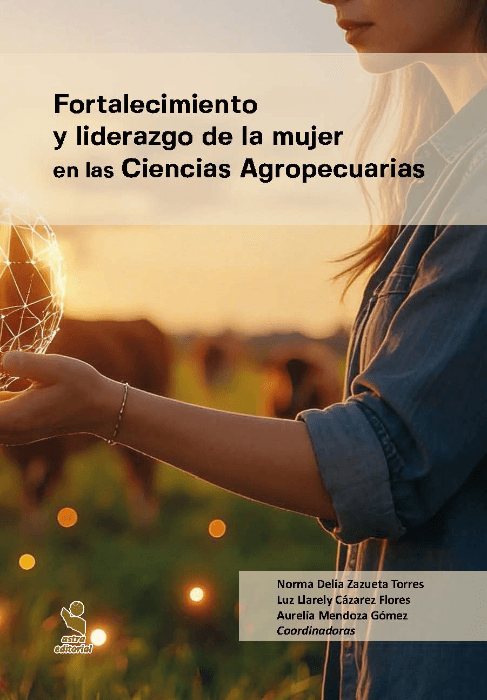
Este libro hablar sobre la Mujer en las ciencias Agropecuarias, nos invita a reflexionar sobre un tema que no solo es relevante, sino urgente y transformador: el fortalecimiento de la mujer en las ciencias agropecuarias.
Hablar de la mujer en este sector es hablar de historia, de lucha y de resiliencia; es hablar del legado que nos dejó y las puertas que nos abrió María Elena Jiménez Lozano, primera Mujer Agrónoma en México. Durante generaciones, las mujeres han sido pilares fundamentales en el campo: sembrando, cosechando, administrando recursos, transmitiendo conocimiento ancestral y sosteniendo comunidades enteras. Sin embargo, su contribución muchas veces ha sido invisi-bilizada o subvalorada.
Referencias
Ávila, J. E., Ramírez, R., López, M., & Hernández, J. (2023). Salinity affects chlorophyll content and photosynthetic performance in horticultural crops. Scientia Horticulturae, 309, 111642.
Bhargava, S., & Sawant, K. (2013). Drought stress adaptation: Metabolic adjustment and regulation of gene expression. Plant Breeding, 132(1), 21–32. https://doi.org/10.1111/pbr.12004
Caravaca, F., Alguacil, M. M., Azcón, R., & Roldán, A. (2002). Influence of salinity on plant growth and nutrient uptake. Plant and Soil, 240, 257–268.
De Wit, M., Liguori, G., & Vaštakaitė-Kairienė, V. (2024). Preharvest and postharvest factors affecting fruit and vegetables quality, physiology, and shelf-life. Frontiers in Plant Science, 15, 1522530. https://doi.org/10.3389/fpls.2024.1522530
Farooq, M., Wahid, A., Kobayashi, N., Fujita, D., & Basra, S. M. A. (2009). Plant drought stress: Effects, mechanisms and management. Agronomy for Sustainable Development, 29(1), 185–212. https://doi.org/10.1051/agro:2008021
Rustioni, L., & Bianchi, D. (2021). Leaf physiological responses to water deficit stress in horticultural crops. Plant Physiology and Biochemistry, 162, 1–9.
Taiz, L., Zeiger, E., Møller, I. M., & Murphy, A. (2015). Plant physiology and development (6th ed.). Sinauer Associates.
Zelm, E. van, Zhang, Y., & Testerink, C. (2020). Salt tolerance mechanisms of plants. Annual Review of Plant Biology, 71, 403–433. https://doi.org/10.1146/annurev-arplant-050718-100005
Ali, O., Ramsubhag, A., & Jayaraman, J. (2021). Biostimulant properties of seaweed extracts in plants: implications towards sustainable crop production. Plants, 10(531), 1-27.
Argenta, G.; Silva, P.R.F.; Bortolini, C.G.; Forsthofer, E.L.; Strieder, M.L. 2001. Relação da leitura do clorofilômetro comosteores de clorofila extraívele de nitrogênionafolha de milho. Revista Brasileira de Fisiologia Vegetal, 13(2): 158-167.
Arjona H. D.; Herrera J. E.; Gómez J. A.; J. Ospina. 2004. Evaluation of the application of urea, molasses and amino acids on growth and yield of onion plants (Allium cepa L. Group cepa) in the Bogotá Savanna. Agronomía Colombiana. 22 (2): 177-184.
Battacharyya, D., Babgohari, M. Z., Rathor, P., & Prithiviraj, B. (2015). Seaweed extracts as biostimulants in horticulture. Scientia Horticulturae, 196, 39-48.
Deepika, & Tiwari, S. P. (2021). Effect of different Biozyme concentration for maximum yield potential in Capsicum annuum L. International Journal of Chemical Studies, 9(2), 432-436.
Godoy, L.J.G.; Villas Bôas, R.L.; Büll, L.T. 2003. Utilização da medida do clorofilômetro no manejo da adubação nitrogenada em plantas de pimentão. Revista Brasileira de Ciência do Solo, 27(6): 1049-1056.
Hernández, H. R. M.; Santacruz, R. F.; Ruiz, L. M. A.; Norrie, J. and Hernández, C. G. 2014. Effect of liquid seaweed extracts on growth of tomato seedlings (Solanum lycopersicum L.). J. Appl. Phycol. 26(1):619-628.
Minolta Camera Co. 1989. Manual for chlorophyll meter SPAD-502. Minolta Camera Co., Ltd., Japan. 22 pp.
Olivares S, E. 2012. Diseños Experimentales. Facultad de Agronomía de la Universidad Autónoma de Nuevo León. Escobedo N.L. Versión 1.0 en disco compacto.
Taiz L.; Zeiger E. 2003. Plant Physiology. Sinauer Asso ciates Publisher. USA. 623 p.
Turchi A. 1999. Biblioteca práctica del horticultor. Guía práctica de horticultura. Barcelona, España: Barcelona [España]: Ediciones CEAC, S.A. 236 p. (Guías de agricultura y ganadería). ISBN: 978-84 329-2203-9; [consultado el 18 de jun. de 2022]. http://biblioteca.unach.edu.ec/opac_css/ index.php?lvl=notice_display&id=8417.
Abd-Alkarim, E., Bayoumi, Y., Metwally, E., y Rakha, M. (2017). Silicon supplements affect yield and fruit quality of cucumber (Cucumis sativus L.) grown in net houses. African Journal of Agricultural Research, 12(31), 2518-2523. https://doi.org/10.5897/AJAR2017.12484
Feng, Z., Fang, L., Zheng, C. S., Shu, H. R., Sun, X. Z., y Yoo, Y. K. (2010). Effects of acetylsalicylic acid and calcium chloride on photosynthetic apparatus and reactive oxygen-scavenging enzymes in chrysanthemum under low temperature stress with low light. Agricultural Sciences in China, 9(12), 1777–1786. https://doi.org/10.1016/S1671-2927(09)60276-5
Hew, C. S. (1987). The effects of 8-hydroxylquinoline sulphate, acetylsalicylic acid and sucrose on bud opening of Oncidium flowers. Journal of horticultural science, 62(1), 75-78. https://doi.org/10.1080/14620316.1987.11515752
Huang, C. H., Roberts, P. D., y Datnoff, L. E. (2011). Silicon suppresses Fusarium crown and root rot of tomato. Journal of Phytopathology, 159(7‐8), 546-554. https://doi.org/10.1111/j.1439-0434.2011.01803.x
Laane, H. M. (2018). The effects of foliar sprays with different silicon compounds. Plants, 7(2), 45. https://doi.org/10.3390/plants7020045
Li, Z., Song, Z., Yan, Z., Hao, Q., Song, A., Liu, L., Yang, X., Xia, S., y Liang, Y. (2018). Mejora del silicio de la acumulación estimada de carbono de biomasa vegetal bajo tensiones abióticas y bióticas. Un metaanálisis. Agronomía para el Desarrollo Sostenible, 38(3), 26. https://doi.org/10.1007/s13593-018-0496-4
Matychenkov, I. V., Khomyakov, D. M., Pakhnenko, E. P., Bocharnikova, E. A., y Matychenkov, V. V. (2016). Mobile Si-rich compounds in the soil–plant system and methods for their determination. Moscow University Soil Science Bulletin, 71, 120-128. https://doi.org/10.3103/S0147687416030054
Shipley, B., y Meziane, D. (2002). The balanced‐growth hypothesis and the allometry of leaf and root biomass allocation. Functional Ecology, 16(3), 326-331. https://doi.org/10.1046/j.1365-2435.2002.00626.x
Tucuch-Haas, C. J., Angulo-Castro, A., Tucuch-Haas, J. I., Mejia-Delgadillo, M. A., y López-Orona, C. A. (2021). Use of Aspirine®(Acetylsalicilico acid) in the yield of grain of corn crop. Revista bio ciencias, 8. https://doi.org/10.15741/revbio.08.e1035
Korkmaz, A., Uzunlu, M., y Demirkiran, A. R. (2007). Treatment with acetyl salicylic acid protects muskmelon seedlings against drought stress. Acta Physiologiae Plantarum, 29(6), 503-508. https://doi.org/10.1007/s11738-007-0060-3
Ávila, C. E; Camarillo, P. M; Aguilera, M. N; Ochoa E. X; Garcia. B. E; Cota, B. C; 2024. XXVII Congreso Internacional de Ciencias Agrícolas. Universidad Autónoma de Baja California. 791-796.
Ávila, CE; Ochoa, EXM: Montoya, CL; Aguilera, MNA; Borbón, GA y Alvarado, PJI. 2017. Chey-ol: nueva variedad de cártamo oleica para el noroeste de México. Revista Mexicana de Ciencias Agrícolas 8(5): 1209-1212.
Borbón-Gracia, A; Ochoa-Espinoza, XM; Montoya-Coronado, L; Pérez-Márquez, J; García-Camarena, MG. 2011. CIANO LIN: Nueva variedad de cártamo linoleica. Revista Mexicana de Ciencias Agrícolas 2(5): 791-794.
Camarillo, P. M; Machain L. M; Guzman, R. S. 1983.Guia para producer cártamo en el Valle de Mexicali. Mexicali, Baja California, Mexico. Folleto para productores Núm. 6. 16p.
CONAGUA Comisión Nacional del Agua, 2004. Reporte técnico No. GAS/SEMG/2005/01. Gerencia de Aguas Subterráneas, Subgerencia de Exploración y Monitoreo.
García-Cueto, O. R. y Santillán, N. (2012). Modeling extreme climate events: two case studies in Mexico. En L. M. Druyan (Ed.). Climate models (pp. 137-160). Intech.
Harrigan, E., F.S. 1985. Safflower breeding for disease resistance in Australia. Sesame and Safflower Conference. Newsletter N°.1: 44-45.
Montoya, C. L. y Ochoa, F. B. 2006. Guía para producir cártamo en el sur de Sonora. INIFAP-CIRNO-CESS, Cd. Obregón Sonora. Folleto para productores núm. 37. 24 p.
Montoya, C. L. 2010. El cultivo del cártamo (Carthamus tinctorius L.) en México. INIFAP-CIRNO-CENEB, Cd. Obregón, Sonora. Libro Técnico núm. 5. 96p.
Ochoa Espinoza XM; Aguilera Molina NA; Montoya Coronado L; García Bolívar E H; Cota Barreras C I; Avila Casillas E; Borbón Gracia B; y. Marroquín Morales J A. 2024. Huatson ol, nueva variedad de cártamo del tipo oleico. Revista Fitotecnia Mexicana. Vol. 47 (4): 421-423.
Krupinsky, J.M. 1974. Safflower: a crop whit an Alternaria leaf spot problem. Dept Plant Pathology. Proyect Document. University of Montana.
Quilantán, V. L. 1978. Cártamo. In: Cervantes, S. T. (Ed.). Recursos genéticos disponibles a México. Sociedad Mexicana de Citogenética, AC. 209-213 pp.
Bresciani, A., Pagani, M. A., & Marti, A. (2022). Pasta-making process: A narrative review on the relation between process variables and pasta quality. Foods, 11(3), 256.
Castro Montoya, Y. A. (2024). Efecto de las condiciones de extrusión y de la adición de harina de nopal (Opuntia ficus-indica L.) sobre propiedades nutrimentales y nutracéuticas de pastas alimenticias libres de gluten, a base de arroz quebrado.
Feijoo, J. L. C., Mora, E. O. E. M., Calderon, C. E. S., & Torres, R. D. (2018). Pruebas de cocción de pastas alimenticias elaboradas con harina de trigo-almidón de banano. Cumbres, 4(1), 63-73.
Vargas Zamudio, E. A. (2024). Caracterización tecnofuncional, nutricional y nutracéutica de pasta alimenticia a base de amaranto/maíz azul. Actividad hipoglucemiante.
Vásquez, K. L. R., Hualpa, E. O. C., Valarezo, J. G. D., & Maggi, V. E. M. (2024). Sustitución Parcial de Harina de Trigo Con Harina de Mote (Zea Mays) en la Producción de Pasta Enriquecida con Albahaca Deshidratada y Extracto de Espinaca. Ciencia Latina Revista Científica Multidisciplinar, 8(6), 2466-2483.
Betanzo-Torres, E.A., Piñar-Álvarez, M., Sierra-Carmona, C.G., Santamaría, L.E.G., Loeza-Mejía, C.I., Marín-Muñiz, J.L., & Sandoval Herazo, L.C. (2021). Proposal of ecotechnologies for tilapia (Oreochromis niloticus) production in Mexico: Economic, environmental, and social implications. Sustainability, 13(12), 6853. https://doi.org/10.3390/su13126853
Brod, E., Oppen, J., Kristoffersen, A.Ø., Haraldsen, T.K., & Krogstad, T. (2017). Drying or anaerobic digestion of fish sludge: Nitrogen fertilisation effects and logistics. Ambio, 46(8), 852–864. https://doi.org/10.1007/s13280-017-0927-5
Chiquito-Contreras, R.G., Hernández-Adame, L., Alvarado-Castillo, G., Martínez-Hernández, M.D.J., Sánchez-Viveros, G., Chiquito-Contreras, C.J., & Hernández-Montiel, L.G. (2022). Aquaculture—production system and waste management for agriculture fertilization—a review. Sustainability, 14(12), 7257. https://doi.org/10.3390/su14127257
Delaide, B., Goddek, S., Keesman, K., & Jijakli, H. (2018). A methodology to quantify aerobic and anaerobic sludge digestion performances for nutrient recycling in aquaponics. Biotechnologie, Agronomie, Société et Environnement, 22(2).
Emerenciano, M.G.C., Fitzsimmons, K., Rombenso, A.N., Miranda-Baeza, A., Martins, G.B., Lazzari, R., Fimbres-Acedo, Y.F. & Pinho, S.M. (2021). Biofloc technology (BFT) in tilapia culture. In Biology and aquaculture of Tilapia (pp. 258–293). CRC Press.
Engle, C.R., & van Senten, J. (2022). Resilience of communities and sustainable aquaculture: governance and regulatory effects. Fishes, 7(5), 268. https://doi.org/10.3390/fishes7050268
Hidalgo, D., Martín-Marroquín, J.M., Corona, F., & Verdugo, F. (2025). Waste-derived fertilizers: conversion technologies, circular bioeconomy perspectives and agronomic value. Agronomy, 15(9), 2167. https://doi.org/10.3390/agronomy15092167
Kurniawan, S.B., Ahmad, A., Imron, M.F., Abdullah, S.R.S., Othman, A.R., & Hasan, H.A. (2025). Achieving a biocircular economy in the aquaculture sector through waste valorization. Toxics, 13(2), 131. https://doi.org/10.3390/toxics13020131
Lian, J., He, Y., Wang, L., Liu, Y., Wang, K., Sunde, J., Rebourns, C., Liu, H., Zhu, X., Han, D., Hu, Q., & Li, M. (2024). Recovery of nutrients from fish sludge to enhance the growth of microalga Chlorella sorokiniana CMBB276. Marine Pollution Bulletin, 203, 116421. https://doi.org/10.1016/j.marpolbul.2024.116421
Martínez-Cordova, L.R., Emerenciano, M.G., Miranda-Baeza, A., Pinho, S.M., Garibay-Valdez, E., & Martínez-Porchas, M. (2023). Advancing toward a more integrated aquaculture with polyculture> aquaponics> biofloc technology> FLOCponics. Aquaculture International, 31(2), 1057–1076. https://doi.org/10.1007/s10499-022-01016-0
Monsees, H., Keitel, J., Paul, M., Kloas, & Wuertz, S. (2017). Potential of aquacultural sludge treatment for aquaponics: evaluation of nutrient mobilization under aerobic and anaerobic conditions. Aquaculture Environment Interactions, 9, 9–18. https://doi.org/10.3354/aei
Moya-Hidalgo, J.R. (2024). La evolución hacia un sistema alimentario sostenible, seguro y saludable: nuevas tendencias alimentarias y control de los riesgos emergentes. Journal of Human Security and Global Law, 3, 75–104. https://doi.org/10.5565/rev/jhsgl.43
Regueiro, L., Newton, R., Soula, M., Méndez, D., Kok, B., Little, D.C., Pastres, R., Johansen, J., & Ferreira, M. (2022). Opportunities and limitations for the introduction of circular economy principles in EU aquaculture based on the regulatory framework. Journal of Industrial Ecology, 26(6), 2033-2044. https://doi.org/10.1111/jiec.13188
Shrivastava, V., & Laasri, I. (2025). Nutrient recovery strategies and agronomic performance in circular farming: a comprehensive review. Nitrogen, 6(3), 80. https://doi.org/10.3390/nitrogen6030080
Siwach, S., Chaurasia, M., Dolkar, P., Yadav, A., Yadav, P., Themchuirin, L., Sonia, N., Kohli, D., Paswan, P., & Negi, R.K. Sustainable Aquaculture: A blueprint for achieving zero hunger. In Biotechnology Innovations and Sustainability for zero hunger (pp. 136–150). CRC Press.
Zhang, H., Gao, Y., Liu, J., Lin, Z., Lee, C.T., Hashim, H., Wu, W.M., & Li, C. (2021). Recovery of nutrients from fish sludge as liquid fertilizer to enhance sustainability of aquaponics: A review. Chemical Engineering, 83. https://doi.org/10.3303/CET2183010
Coates,B.S, Sumerford, D.V. and Lewis, l.C. 2008. La segregación de la aminopeptidasa 1, la cadherina y los alelos similares a bre5 del barrenador europeo del maíz, Ostrinia nubilalis, de una colonia resistente a las toxinas Cry1Ab de Bacillus thuringiensis no están asociados con el peso de las larvas F2 cuando se alimentan con una dieta que contiene Cry1Ab, Journal of Insect Science, 8(1):21. https://doi.org/10.1673/031.008.2101
Dirección General del Servicio de Información Agroalimentaria y Pesquera (DGSIAP). 2025. Panorama Agroalimentario. Secretaría de Agricultura y Desarrollo Rural Coordinación General de Información, Inteligencia y Evaluación. On line: http://www.gob.mx/agricultura/dgsiap
Perez J.C. y Moraima, S. 2012. Ciclo de vida y reproducción de Heliothis virescens (F.) (Lepidoptera:Noctuidae) sobre garbanzo. Revista Protección Vegeta. Vol. 27(2):85-89. On line: https://www.censa.edicionescervantes.com/index.php/RPV/article/view/104/94
Ross, S., Yang, F., Santiago-González J.C., Abdelgaffar, H., Kerns, D.D., Jurat-Fuentes, J.L., Sun, X., Collett, D. and Kerns, D.L. 2025. Evaluation of GS-omega/kappa-Hxtx-Hv1a and Bt toxins against Bt-resistant and -susceptible strains of Helicoverpa zea (Boddie) and Spodoptera frugiperda (J.E. Smith). Pest Manag Sci. 81(7):3565-3572. doi: 10.1002/ps.8725. PMID: 39964042; PMCID: PMC12159400.
Alcíva, L. l. M., Vera, R. J. H., Arévalo, S. O., Arévalo, S. B., Pachar, O. L., Castillo, R. C. (2021). Aplicación de lixiviados de vermicompost y respuesta agronómica de dos variedades de pimiento. Rev Colombiana Cienc Anim. Recia; 13(1):1-10. https://doi.org/10.24188/recia.v13.n1.2021.793
García, S. J. C., Sánchez, V. M., Pérez H. H. y Méndez L. A. (2025). Efecto del tipo de lixiviado de lombricomposta sobre el crecimiento, rendimiento y calidad de maíz. Tropical and Subtropical Agroecosystems 28 (109): 1-12.
Gómez, M. A.; Ramos L. L.: Leyva H. S. (2025). Panorama actual de la producción y comercialización de cebolla blanca (Allium cepa L.) en México: Una revisión de literatura. En Ramos L. L. y Leyva H. S. (Eds.), Agronegocios desde una visión analítica (pp 71-88). Astra Editorial.
Coyotl-Pérez, W. A., Flores-Hernández, M., Ramírez-Díaz, C. A., & Villa-Ruano, N. (2025). Alternativas agroecológicas para contrarrestar enfermedades en cultivos de Capsicum. Revista Mexicana de Fitopatología, 43(SPE).
Danial, N. D. N., Asib, N., Sadi, T., & Ismail, S. I. (2025). Evaluation of Morinda citrifolia Leaf Extract Against Phytophthora palmivora in Controlling Stem Canker on Durian (Durio zibethinus). Malaysian Applied Biology, 54(1), 24-37.
Franco, J. D. D. M., del Rosario García, S. A. M., Reyes, M. M., Martínez, L. S., Almonte, I., Tineo, E. S. & Vitta, N. (2023). Principales géneros de hongos fitopatógenos asociados a enfermedades en vegetales orientales en La Vega, República Dominicana. APF, 12(1).
Guardiola, E.N., Sumitro, S.B. y Widyarti, S. (2025). La fermentación natural de calabaza amarga (Momordica charantia) y fruto de noni (Morinda citrifolia) en miel aumenta la concentración total de fenoles, flavonoides y antioxidantes. En BIO Web of Conferences (Vol. 154, p. 04002). EDP Sciences.
Hou, S., Ma, D., Wu, S., Hui, Q. y Hao, Z. (2025). Morinda citrifolia L.: Una revisión exhaustiva sobre fitoquímica, efectos farmacológicos y potencial antioxidante. Antioxidantes, 14 (3), 295.
Ley-López, N., Basilio-Heredia, J., Cruz-Lachica, I., Márquez-Zequera, I., Medina-López, R., Martín-Hernández, C. S., & García-Estrada, R. S. (2025). Fatty acid composition of lipopeptides with antifungal activity synthesized by Bacillus amyloliquefaciens. Revista Mexicana de Fitopatología, 43(3).
Ley-López, N., Medina-López, R., Hinojosa-Gómez, J., López-Beltrán, M. A., Estrada-Acosta, M. D., Cázarez-Flores, L. L., & Yáñez-Juárez, M. G. (2024). Bioprospecting of rhizobacteria with antagonistic activity against Fusarium spp., a parasite of cucumber (Cucumis sativus). Agro Productividad.
Liu, X., Lin, X., Hu, X., Li, C., Wang, L. y Fei, T. (2024). Fruto y subproductos de noni (Morinda citrifolia): Una revisión exhaustiva de su composición química, efectos beneficiosos para la salud, evaluación de la seguridad y aplicaciones industriales. Tendencias en Ciencia y Tecnología de los Alimentos, 153, 104690.
Ogbeide, O.K., Aghedo, O.N., Akhidenor, F.I., Dibie, E.N., & Iyasele, J.U. (2025). Constituyentes fitoquímicos cualitativos y cuantitativos, actividades antioxidantes y estudios antimicrobianos del extracto de metanol del tallo de Morinda citrifolia. Ciencias de la Fitoquímica, 4 (2), 98-106.
Dar, A. A., Kancharla, P. K., Chandra, K., Sodhi, Y. S., & Arumugam, N. (2019). Assessment of variability in lignan and fatty acid content in the germplasm of Sesamum indicum L. Journal of Food Science and Technology, 56(2), 976–986. https://doi.org/10.1007/s13197-018-03564-x
FAO (Organización de las Naciones Unidas para la Alimentación y la Agricultura). (2019). El patrimonio para la biodiversidad mundial para la alimentación y la agricultura: en resumen: Roma, Italia. Comisión de Recursos Genéticos para la Alimentación y Agricultura. Disponible en http://www.fao.org/3/ca3229en/CA3229EN.pdf
Hussain, S. A., Hameed, A., Ajmal, I., Nosheen, S., Suleria, H. A. R., & Song, Y. (2018). Effects of sesame seed extract as a natural antioxidant on the oxidative stability of sunflower oil. Journal of Food Science and Technology, 55(10), 4099–4110. https://doi.org/10.1007/s13197-018-3336-2
Kadkhodaie, A., Razmjoo, J., Zahedi, M., & Pessarakli, M. (2014). Oil Content and Composition of Sesame (Sesamum indicum L.) Genotypes as Affected by Irrigation Regimes. Journal of the American Oil Chemists’ Society. 91. 1737-1744. https://doi.org/10.1007/s11746-014-2524-0
Alcalá-Rico, J. S. G. J., Ramírez-Meraz, M., Maldonado-Moreno, N., Borja-Bravo, M., Camposeco-Montejo, N., & López-Benítez, A. (2023). Variación morfológica en frutos de genotipos de chile piquín (Capsicum annuum var. Glabriusculum) del Noreste y Centro de México. Ecosistemas y Recursos Agropecuarios, 10(2). https://doi.org/10.19136/era.a10n2.3482
Balderas Quezada, K. I., Piña Ramírez, F. J., García Muñoz, S. A., Soto Parra, J. M., & Yáñez Muñoz, R. M. (2023). Chile piquín (Capsicum annuum var. glabriusculum): Tesoro picante de la naturaleza. Revista Biológico Agropecuaria Tuxpan, 11(2), 18–23. https://doi.org/10.47808/revistabioagro.v11i2.485
Mc Caughey-Espinoza, D. M., Buitimea-Cantúa, G. V., Buitimea-Cantúa, N. E., Ayala-Astorga, G. I., & Ochoa-Meza, A. (2020). Propiedades fisicoquímicas y rendimiento de frutos de chile chiltepín (Capsicum annuum var. glabriusculum Dunal) cultivados bajo diferentes condiciones de crecimiento. IDESIA (Chile), 38(3), 77–86. https://doi.org/10.4067/S0718-34292020000300077
Moreno-Contreras, V. I., Delgado-Gardea, M. C. E., Ramos-Hernández, J. A., Méndez-Tenorio, A., Varela-Rodríguez, H., Sánchez-Ramírez, B., Muñoz-Ramírez, Z. Y., & Infante-Ramírez, R. (2024). Genome-wide identification and characterization of SNPs and InDels of Capsicum annuum var. glabriusculum from Mexico based on whole genome sequencing. Plants, 13(22), 3248. https://doi.org/10.3390/plants13223248
Pérez, M. P., Valenzuela Alamilla, L., De la Cruz Ricardez, D., Santos Valencia, J., & López Castañeda, A. (2023). Desarrollo de plántulas de chile amashito (Capsicum annuum var. glabriusculum) inoculadas con micorrizas en dos tipos de suelo. REVISTA IPSUMTEC, 6(6), 71–79. https://doi.org/10.61117/ipsumtec.v6i6.55
Ramírez Novoa, U. I., Cervantes Ortiz, F., Montes Hernández, S., Raya Pérez, J. C., Cibrián Jaramillo, A., & Andrio Enriquez, E. (2018). Diversidad morfológica del chile piquín (Capsicum annuum L. var. glabriusculum) de Querétaro y Guanajuato, México. Revista mexicana de ciencias agrícolas, 9(6), 1159-1170. https://doi.org/10.29312/remexca.v9i6.1581
Gómez, C. M. A.; Schwentesius, R. R.; Ortiga, R. J. y Gómez, T. L. (2010) Situación y desafíos del sector orgánico en Mèxico. Revista Mexicana de ciencias agrícolas. Vol 1. Nùm. 4. 1 de oct.- 31 dic. 2010 p. 593-608.
Olivares S, E. 2012. Diseños Experimentales. Facultad de Agronomía de la Universidad Autónoma de Nuevo León. Escobedo N.L. Versión 1.0 en disco compacto.
Sahu, B. B., Sahu, U., Tripathy, U., Barik, N., Agnibesh, A., Paikaray, A., Mohapatra, S., Senapati, S., & Sundaray, J. (2017). Fusion of sugar industry and fish processing industry waste products in developing high value organic fertilizer and feed supplement. International Journal of Fisheries and Aquatic Research, 2(4), 6-18.
Suárez, S. D. M. (2009). Caracterización de un compuesto orgánico producido en forma artesanal por pequeños agricultores en el departamento del Magdalena. [Tesis de Maestría en Ciencias Agrarias con Énfasis en Suelos, UNAL]. https://repositorio.unal.edu.co/handle/unal/3270
Villegas, E. J. A., Reyes, P. J. J., Nieto, G., Ruiz, E. F. H., Cruz, F. A., & Murillo, A. B. (2018). Bioestimulante Liplant®: Su efecto en Solanum lycopersicum (L.) cultivado en suelos ligeramente salinos. Revista mexicana de ciencias agrícolas, 9(SPE20), 4137-4147.
Al-Harbi, M., Al-omran, A., & Alharbi, A. (2018). Utilizing of condensed water from air conditioners as a non-conventional water resource for irrigation. Journal of the Saudi Society of Agricultural Sciences, 17(2), 213-219. https://doi.org/10.1016/j.jssas.2016.05.004
Al-Hamed, S. A., Wahby, M. F., & Alabdullah, S. M. (2023). Utilizing air-conditioner condensate water to improve tomato production under arid conditions: Physiological and yield responses. Journal of Arid Environments, 208, 104887. https://doi.org/10.1016/j.jaridenv.2022.104887
Chen, L., Zhao, X., & Wu, F. (2022). Physiological responses of cucumber plants to irrigation with air conditioner condensate water: Photosynthetic performance and osmotic adjustment. Scientia Horticulturae, 293, 110727. https://doi.org/10.1016/j.scienta.2021.110727
Gunawardena, S. D. A. U., Jayawardana, D. T., & Thilakarathne, B. M. P. I. (2021). Suitability of air conditioner condensate water for irrigation of lettuce (Lactuca sativa L.): A study on growth, yield, and heavy metal accumulation. Agricultural Water Management, 245, 106577. https://doi.org/10.1016/j.agwat.2020.106577
Khan, S., Al-Ghamdi, S. G., & Koc, M. (2021). Sustainable irrigation using non-conventional water resources: Benefits and potential risks of condensate water from air conditioning systems. Agricultural Water Management, 243, 106462. https://doi.org/10.1016/j.agwat.2020.106462
Lee, J., & Wang, H. (2022). Effects of reclaimed condensate water from air conditioning systems on growth and nutrient content of spinach (Spinacia oleracea). Horticulturae, 8(3), 215. https://doi.org/10.3390/horticulturae8030215
Mahmood, A., Bakhsh, A., & Hassan, S. (2021). Sustainable utilization of air conditioner condensate water for irrigation purposes. Journal of Cleaner Production, 321, 128963. https://doi.org/10.1016/j.jclepro.2021.128963
Altomare, C., Norvell, W. A., Björkman, T., & Harman, G. E. (1999). Solubilization of phosphates and micronutrients by the plant-growth-promoting and biocontrol fungus Trichoderma harzianum. Applied and Environmental Microbiology, 65(7), 2926–2933.
Brent, K. J., & Hollomon, D. W. (2007). Fungicide resistance: The assessment of risk (FRAC Monograph No. 2). Global Crop Protection Federation.
Guzmán Rodas, E. G. (2016). Efecto de microorganismos benéficos en el desarrollo del cultivo de frijol (Tesis de licenciatura/maestría). Universidad Nombre.
Harman, G. E., Howell, C. R., Viterbo, A., Chet, I., & Lorito, M. (2004). Trichoderma species—Opportunistic, avirulent plant symbionts. Nature Reviews Microbiology, 2(1), 43–56. https://doi.org/10.1038/nrmicro797
Howell, C. R. (2003). Mechanisms employed by Trichoderma spp. in the biological control of plant diseases: The history and evolution of current concepts. Plant Disease, 87(1), 4–10. https://doi.org/10.1094/PDIS.2003.87.1.4
Kloepper, J. W., Ryu, C. M., & Zhang, S. (2004). Induced systemic resistance and promotion of plant growth by Bacillus spp. Phytopathology, 94(11), 1259–1266. https://doi.org/10.1094/PHYTO.2004.94.11.1259
Leslie, J. F., & Summerell, B. A. (2006). The Fusarium laboratory manual. Blackwell Publishing.
López, R., & Torres, A. (2020). Primeros reportes de Fusarium nygamai asociado a pudrición radical en frijol. Revista Mexicana de Fitopatología, 12(3), 45–52.
Mercado-Blanco, J., & Bakker, P. A. H. M. (2007). Interactions between beneficial rhizobacteria and soil-borne pathogens: Insights into the molecular mechanisms. Current Opinion in Plant Biology, 10(4), 386–391. https://doi.org/10.1016/j.pbi.2007.05.006
Smith, D., Pérez, L., & Gómez, H. (2018). Diversidad de Fusarium asociados a enfermedades radiculares en leguminosas del noroeste de México. Fitopatología Mexicana, 41(1), 23–34.
Smith, S. E., & Read, D. J. (2008). Mycorrhizal symbiosis (3rd ed.). Academic Press.
Vinale, F., Sivasithamparam, K., Ghisalberti, E. L., Marra, R., Woo, S. L., & Lorito, M. (2008). Trichoderma–plant–pathogen interactions. Soil Biology & Biochemistry, 40(1), 1–10. https://doi.org/10.1016/j.soilbio.2007.07.002
Báez-Parra, K. M., Soto-Beltrán, M., López-Cuevas, O., Basilio Heredia, J., Alcaraz-Meléndez, L., & Angulo-Escalante, M. A.. (2019). Actividad Antimicrobiana in vitro de extractos metánolicos y hexánicos de Turnera diffusa contra patógenos comunes de vías urinarias. Revista bio ciencias, 6(spe), e670. https://doi.org/10.15741/revbio.06.nesp.e670
Castillo, F., Hernández-Ochoa, L., González-Coloma, A., & López-Orenes, A. (2023). Antimicrobial activity of Lippia graveolens essential oil against multidrug-resistant Staphylococcus aureus isolated from bovine mastitis. Journal of Applied Microbiology, 134(5), 1–11. https://doi.org/10.1111/jam.15877
Fairbrother, J. M., Nadeau, É., & Gyles, C. L. (2020). Escherichia coli in postweaning diarrhea in pigs: An update on bacterial types, pathogenesis, and prevention strategies. Animal Health Research Reviews, 21(1), 1–13. https://doi.org/10.1017/S1466252319000152
FAO. (2019). The future of livestock in Latin America. Organización de las Naciones Unidad. https://doi.org/10.4060/cd1334es
García Alarcón, Z. N., Alderete Gutiérrez, J. de J., Rodríguez Trejo, C., Leal Rodríguez, J. A., Olave Leyva, J. I., & Martínez Juárez, V. M. (2025). Resistencia a antimicrobianos en bovinos leche y bovinos carne y su posible impacto en la salud pública a nivel mundial. Boletín de Ciencias Agropecuarias del ICAP, 11(21), 21–29. https://doi.org/10.29057/icap.v11i21.13111 repository.uaeh.edu.mx
Hulankova, R. (2024). Methods for Determination of Antimicrobial Activity of Essential Oils In Vitro—A Review. Plants, 13(19), 2784. https://doi.org/10.3390/plants13192784
Méndez-Pfeiffer, P., Ballesteros-Monrreal, M. G., Leyva, M., Ortega-García, J., Montaño-Leyva, B., Aguilar-Martínez, M., & Valencia-Rivera, D. E. (2024). Actividad antioxidante, antiproliferativa y antibacteriana de extractos de Phoradendron californicum, una planta parásita del noroeste de México. Biotecnia, 26, e2286. https://doi.org/10.18633/biotecnia.v26i0.2286
Morsy, Z. M., Ghaly, M. F., & Elariny, E. Y. (2024). Antibacterial activity of plant phytochemicals against antibiotic-resistant bacteria isolated from meat. Journal of Advanced Veterinary Research, 14(3), 475–480. https://doi.org/10.21608/javr.2024.1708
Reyes, G., Pérez-Vázquez, A., Ramírez-Sánchez, H., & Flores-Hernández, A. (2020). Actividad antibacteriana del aceite esencial de Lippia graveolens frente a Staphylococcus aureus aislado de mastitis bovina. Revista Mexicana de Ciencias Pecuarias, 11(4), 1023–1034. https://doi.org/10.22319/rmcp.v11i4.5123
Singla RK, Dhir V, Madaan R, Kumar D, Singh Bola S, Bansal M, Kumar S, Dubey AK, Singla S, Shen B. The Genus Alternanthera: Phytochemical and Ethnopharmacological Perspectives. Front Pharmacol. 2022 Apr 11;13:769111. doi: 10.3389/fphar.2022.769111
Vargas-Monter, Jorge, Rivero-Pérez, Nallely, Valladares-Carranza, Benjamín, Ojeda-Ramírez, Deyanira, Noguez-Estrada, Juan, & Zaragoza-Bastida, Adrian. (2025). Lippia graveolens y su actividad contra bacterias asociadas a mastitis bovina: Revisión bibliográfica. Abanico veterinario, 16, e2024-34. Epub 04 de julio de 2025.https://doi.org/10.21929/abavet2025.2
Zaragoza-Bastida, A.; Flores-Aguilar, S.C.; Aguilar-Castro, L.M.; Morales-Ubaldo, A.L.; Valladares-Carranza, B.; Rangel-López, L.; Olmedo-Juárez, A.; Rosenfeld-Miranda, C.E.; Rivero-Perez, N. Antibacterial and Hemolytic Activity of Crotalus Triseriatus and Crotalus Ravus Venom. Animals 2020, 10, 281. https://doi.org/10.3390/ani10020281
Agronet. (2025). Área, producción y rendimiento agrícola en Colombia. Observatorio de Información Rural y Agropecuaria. https://agronet.gov.co/estadisticas/agricola?producto_nacional=05230101&ciclo_nacional_filter=&producto_municipal=05230101#municipal
Botero M.J; Castellanos P.A; Zuluaga L.E. 2003. Identificación de enfermedades asociadas al cultivo de mora (Rubus glaucus Benth.), en un sistema agroforestal en el municipio de Santa Rosa de Cabal (Risaralda). En: Evaluación de especies forestales con potencial de tutores vivos en la producción de mora (Rubus glaucus Benth.). Boletín de Investigación. CORPOICA-PRONATTA. Manizales. p. 25-30.
Castellanos González, L., Vera Peña, M. S., & Calderón Gutiérrez, J. A. (2023). Enfermedades fúngicas en mora (Rubus spp.) en los municipios de Pamplona y Pamplonita Norte de Santander. @limentech, Ciencia y Tecnología Alimentaria, 21(2), 69–84. https://doi.org/10.24054/limentech.v21i2.262.
Departamento Administrativo Nacional de Estadística (DANE). (2013). Boletín mensual: Insumos y factores asociados a la producción agropecuaria. El cultivo de la mora de Castilla frutal de clima frío moderado, con propiedades curativas para la salud humana (No. 17). Bogotá, Colombia.
Franco, G., y Bernal Estrada, J. A. (Comps.). (2020). Tecnología para el cultivo de la mora (Rubus glaucus Benth.). Corporación Colombiana de Investigación Agropecuaria (AGROSAVIA). https://doi.org/10.21930/agrosavia.manual.7403251.
Gotor, E., Alercia, A., Rao, VR, Watts, J. y Caracciolo, F. (2008). La actividad de información científica de Bioversity International: las listas de descriptores. Recursos genéticos y evolución de cultivos, 55, 757
Hernández Pachón, D. M., Árdila Panesso, S. M., Díaz Jiménez, J. S., Perilla Gómez, M. A., Cubillos Pedraza, D. D., Serrano Sánchez, J. C., … Pulido Ortíz, N. L. (2018). Caracterización de agentes causales de enfermedades en el cultivo de mora (Rubus glaucus) en la finca manantial en la vereda sabaneta, municipio de La Vega, Cundinamarca. Ciencias Agropecuarias, 4(1), 9–17. https://doi.org/10.36436/24223484.239
Lobo M.; Medina C.; Delgado O.; & Bermeo A. (2007). Variabilidad morfológica de la colección colombiana de lulo (Solanum quitoense Lam.) y especies relacionadas de la sección Lasiocarpa. Revista Facultad Nacional de Agronomía Medellín, 60: 3939-3964.
Saldarriaga, A., Franco, G., Díaz, C. A. y Múnera, G. E. (2017). Manual de campo para reconocimiento, monitoreo y manejo de las enfermedades de la mora (Rubus glaucus Benth.). Corporación Colombiana de Investigación Agropecuaria (AGROSAVIA).
HERNÁNDEZ MUÑOZ, P. (2023). Uso de un mejorador de suelo para la modificación edafológica de las propiedades físico-químicas. Universitat Politècnica de València. https://riunet.upv.es/handle/10251/197915
OVIEDO, F. M. C., HERRERA, M. L., HERNÁNDEZ, R. B., SANDOVAL, O. A., LUCHO-CONSTANTINO, C. A. & SANTAMARÍA, M. I. R. 2012. Degradación del suelo en el Distrito de riego 003 Tula, Valle del Mezquital, Hidalgo, México. Revista Científica UDO Agrícola, 12, 873-880. https://dialnet.unirioja.es/servlet/articulo?codigo=6104338
SANTANDER, J. S., LIRA, B. P., ARTEAGA, K. A. & CAMARILLO, J. P. P. 2024. Physicochemical characterization of agricultural soils under a traditional system in the Mezquital Valley, Hidalgo. South Florida Journal of Development, 5, e3937-e3937. DOI: 10.46932/sfjdv5n5-017 https://dialnet.unirioja.es/servlet/articulo?codigo=6104338
SIAP, D. G. D. S. D. I. A. Y. P. 2024. Anuario Estadístico de la Producción Agrícola. Producción Agrícola. SIAP. https://nube.agricultura.gob.mx/cierre_agricola/
TINOCO VEGA, D. N. & PACHECO DEUDOR, Y. R. 2025. Efecto de reguladores de crecimiento en el rendimiento y calidad de triticale forrajero (X Triticosecale Wittmack) asociado con avena cultivado a 4107 msnm–Junín. http://repositorio.undac.edu.pe/handle/undac/5119
VILLASEÑOR-MIR, H. E., HORTELANO-SANTA ROSA, R., MARTÍNEZ-CRUZ, E. & HUERTA-ESPINO, J. 2024. Zafiro, variedad de avena para condiciones de temporal en México. Revista fitotecnia mexicana, 47, 325-328. https://doi.org/10.35196/rfm.2024.3.325
GOMEZ CALDERON, A. D. (2024). Aplicación de heces del cuy (Cavia porcellus) como abono orgánico en la producción de 4 variedades de avena (Avena sativa L.) en condiciones ecológicas de San Pedde Pillao, provincia Daniel Alcides Carrión–2022. http://repositorio.undac.edu.pe/handle/undac/5099
Bhuyan, P., Devi, G., Bhagawati, S., & Pathak, D. (2024). Evaluation of some new nematicides for the management of reniform nematode (Rotylenchulus reniformis) on tomato (Solanum lycopersicum L.). Journal of Experimental Agriculture International, 46(6), 492-499. https://doi.org/10.9734/jeai/2024/v46i62501
Jones JT, Haegeman A, Danchin EG, Gaur HS, Helder J, Perry RN. (2013). Top 10 plant-parasitic nematodes in molecular plant pathology. Mol Plant Pathol. 14(9):946–61. https://doi.org/10.1111/mpp.12057.
Khanal, C., McGawley, E. C., Overstreet, C., Stetina, S. R., Myers, G. O., Kularathna, M. T., & Godoy, F. M. C. (2018). Reproduction and pathogenicity of endemic populations of Rotylenchulus reniformis on cotton. Nematropica, 48, 68–81.
Faske, T., and Sisson, A. (2024). Cotton disease loss estimates from the United States – 2023. Crop Protection Network. CPN-7001-23. https://doi.org/10.31274/cpn-20240219-0
Li, X. Q., Xu, K., Liu, X. M., & Zhang, P. (2020). A systematic review on secondary metabolites of Paecilomyces species: chemical diversity and biological activity. Planta Medica, 86(12), 805-821. https://doi:10.1055/a-1196-1906
Loreto, R. B., da Silva, S. A., & Machado, A. C. Z. (2024). Management of Rotylenchulus reniformis in soybean using genetic and biological approaches. Tropical Plant Pathology, 1-7.
McEwan, R. E., Kantety, R., Nyaku, S. T., Lawrence, K., van Santen, E., & Sharma, G. C. (2014). Relative response of four tomato species to Rotylenchulus reniformis infestation. American Journal of Plant Sciences, 2014. https://doi.org/10.4236/ajps.2014.51009
Robinson AF. (2007). Reniform in US cotton: When, where, why, and some remedies. Annual Review of Phytopathology 45:263–288. https://doi.org/10.1146/annurev.phyto.45.011107.143949.
SIAP. (2025). Servicio de información agroalimentaria y pesquera. Secretaria de agricultura y desarrollo rural (online). www.gob.mx/siap. Accessed 22 oct 2025
Soto-Ramos, C., Wheeler, T. A., Shockey, J., & Monclova-Santana, C. (2023). Rotation of cotton (Gossypium hirsutum) cultivars and fallow on yield and Rotylenchulus reniformis. Journal of Nematology, 55(1). https://doi.org/10.2478/jofnem-2023-0024
Turner, A. K., Graham, S. H., Potnis, N., Brown, S. M., Donald, P., & Lawrence, K. S. (2023). Evaluation of and nematode-resistant cotton cultivars with supplemental Corteva Agriscience nematicides. Journal of Nematology, 55(1).
Valdez-Morales, M. T., Carrillo-Fasio, J. A., García-Estrada, R. S., Correia, K. C., Cruz-Lachica, I., Marquez-Zequera, I., & Tovar-Pedraza, J. M. (2024). Occurrence of the reniform nematode Rotylenchulus reniformis parasitizing cucumber and eggplant in Mexico. Plant Health Progress, https://doi.org/10.1094/PHP-10-23-0087-BR
Weaver, D. B., Lawrence, K. S. and van Santen, E. (2007). Reniform nematode resistance in upland cotton germplasm. Crop Science. 47(1), 19-24. http://dx.doi.org/10.2135/cropsci2006.02.0130
Ye, W. (2018). Nematodes of agricultural importance in North and South Carolina. Plant parasitic nematodes in sustainable agriculture of north America: Vol. 2-Northeastern, Midwestern and Southern USA, 247-276002E
Apel, K., & Hirt, H. (2004). Reactive oxygen species: Metabolism, oxidative stress, and signal transduction. Annual Review of Plant Biology, 55, 373-399.
Cardador-Martínez, A., et al. (2002). Antioxidant activity in common beans (Phaseolus vulgaris L.). Journal of Agricultural and Food Chemistry, 50(24), 6975-6980.
Canellas, L. P., et al. (2015). Humic substances as plant growth promoters. Journal of Plant Nutrition and Soil Science, 178(2), 210-222.
Collado-González, J., et al. (2021). Biostimulants effects on plant physiology. Agronomy, 11(3), 1-18.
Du Jardin, P. (2015). Plant biostimulants: Definition, concept, main categories and regulation. Scientia Horticulturae, 196, 3-14.
Gill, S. S., & Tuteja, N. (2010). Reactive oxygen species and antioxidant machinery in abiotic stress tolerance in crop plants. Plant Physiology and Biochemistry, 48(12), 909-930.
Hadwiger, L. A. (2013). Multiple effects of chitosan on plant systems. Plant Science, 208, 42-49.
Michalak, A. (2006). Phenolic compounds and their antioxidant activity in plants. Polish Journal of Environmental Studies, 15(4), 523-530.
Singleton, V. L., et al. (1999). Analysis of total phenols by Folin–Ciocalteu reagent. Methods in Enzymology, 299, 152-178.
Vinale, F., et al. (2008). Trichoderma-plant-pathogen interactions. Soil Biology and Biochemistry, 40(1), 1-10.
Campesino sin Fronteras. 2020. Advocating for working families to build a brighter future. promotoras de la salud. Recuperado de https://www.campesinossinfronteras.com/
CECATI 52. 2025. Evento conmemorativo de los 10 años de Fundación de Por tu Salud y Nutrición, IAP. Evento. Página de Facebook]www.dgcft.sems.gob.mx. Recuperado de Septiembre, 2025.evención. 2025Tribuna, Ciencia y Salud, lunes, 8 de septiembre de (Página de Facebook]www.oem.com.mx).
Hospital de Jesús (1940). Historia y creación de la denominación de Institución de Asistencia Privada. Secretaria de la Cultura, INAH. México.
Organización Mundial de la Salud (OMS). Health promotion is the process of enabling people to increase control over, and to improve their health.” Health Promotion Glossary, 1998. Recuperado de https://www.who.int/health-topics/health-promotion#tab=tab_1
Por tu salud y nutrición IAP. (2025). Conócenos. Recuperado de https://www.portusaludynutricion.org/conocenos/
Instituto Nacional de Salud Pública (INSP).2022. Panorama de enfermedades crónicas en México.
Encuesta Nacional de Salud y Nutrición (ENSANUT). Recuperado de https: www.saludpublica.mx
Gobierno de México (gob.mx). Programa 2024-2030 para la prevención y promoción de la salud. Recuperado de https://www.gob.mx/presidencia/prensa/gobierno-de-mexico-presenta-programa-2024-2030-para-la-prevencion-y-la-promocion-de-la-salud.
Castellanos, Z., (2013). Los micronutrientes en la nutrición del maíz. INTAGRI. Recuperado en línea el 14 de junio de 2025, de la página web: https://www.intagri.com/articulos/cereales/micronutrintes-en-nutriocion-demaiz
Castro, M., (2017). Rendimientos de maíz duro seco en invierno. Quito, Ecuador. Obtenido de Dirección de Análisis y Procesamiento de la Información, Coordinación General del Sistema de Información Nacional, Ministerio de Agricultura y Ganadería 10 59 p.: http://sinagap.agricultura.gob.ec/pdf/e studios_agroeconomicos/rendimiento_maiz_duro_seco_invierno2017.pdf
León, O. (2019). Incorporación de materia orgánica y su efecto en el comportamiento agronómico del cultivo de maíz (Zea mays L.), en la zona de Babahoyo. Tesis (pregrado), Universidad Técnica de Babahoyo
Olivares, S.E. (2012). Diseño de experimentos FAUANL. Versión 1.0. Facultad de Agronomía de la Universidad Autónoma de Nuevo León, México.
Rodríguez F., P. A. y Reynel Chila, V. (2013). Los residuos orgánicos y su efecto en las propiedades biológicas edáficas y la productividad del pimiento (Capsicum annum L.). Investigación y Saberes, II (3), 34-40.
Baslam, M., Qaddoury, A., & Goicoechea, N. (2021). Role of arbuscular mycorrhizal fungi in the regulation of plant functional traits. Journal of Plant Physiology, 256, 153304.
https://doi.org/10.1016/j.jplph.2020.153304
Billah, M., Khan, M., Bano, A., Nisa, S., Hussain, A., Dawar, K. M., & Munir, A. (2022). Rock phosphate–enriched compost and arbuscular mycorrhizal fungi improve plant growth and soil properties. Sustainability, 14(5), 2620.
https://doi.org/10.3390/su14052620
Bulgari, R., Trivellini, A., Ferrante, A., & Vernieri, P. (2023). Effects of seaweed extracts on plant growth and physiology. Scientia Horticulturae, 317, 112015.
https://doi.org/10.1016/j.scienta.2023.112015
Calvo, P., Nelson, L., & Kloepper, J. W. (2014). Agricultural uses of plant biostimulants. Plant and Soil, 383(1–2), 3–41. https://doi.org/10.1007/s11104-014-2131-8
Cassán, F., Coniglio, A., López, G., Molina, R., Nievas, S., de Carlan, C. L. N., y Donadio, F. (2020). Everything you must know about Azospirillum and its impact on agriculture and beyond. Biology and Fertility of Soils, 56, 461–479. https://doi.org/10.1007/s00374-020-01463-y
Cassán, F., et al. (2020). Everything you must know about Azospirillum and its impact on agriculture. Biology and Fertility of Soils, 56, 461–479.
Chandrasekaran, M., et al. (2023). Mycorrhizal symbiosis for sustainable agriculture under climate change. Journal of Fungi, 9(2), 146.
Dickson, A., Leaf, A. L., & Hosner, J. F. (1960). Quality appraisal of white spruce and white pine seedling stock in nurseries. The Forestry Chronicle, 36(1), 10–13. https://doi.org/10.5558/tfc36010-1
Grossnickle, S. C., & MacDonald, J. E. (2018). Why seedlings grow: influence of plant attributes. New Forests, 49, 1–34. https://doi.org/10.1007/s11056-017-9606-4
Rouphael, Y., y Colla, G. (2020). Biostimulants in agriculture. Frontiers in Plant Science, 11, 40. https://doi.org/10.3389/fpls.2020.00040
Abdelouahhab, Z. & Abdallah, O. (2023). La Variedad Mejhoul: La joya de los Dátiles. Emiratos Árabes Unidos: Kiaai.
Abdelouahhab, Z. & Abdallah, O. (2023). Variedad Mejhoul: La joya de los dátiles. Emiratos Árabes Unidos.
El-Sharabasy, S. F.; Rizk, R. and El – Shirbeny, M. (2022). Egypt’s climatic of the most important date palm cultivar. Agricultural Export Council in The Arab Republic of Egypt, and The Khalifa International Awars for Date Palm and Agricultural Innovation. 325 p.
Food and Agriculture Organization. 2022. Word production of dates.
Glenn C.W., 2016. The commercial date industry in the Unated States and México. HortScience, Vol 51 (II):1333-1338.
Hamadttu, A.F. and El-Shafie. 2022. The Old World date palm mite Oligonychus afrasiaticus (McGregor 1939)(Acari: Tetranychidae), a major fruit pest: biology, ecology, and management. CABI Reviews 2022 17, No. 020. 15 pp.
Lira Herrera, Héctor, «Actualización del modelo geológico conceptual del campo geotérmico de Cerro Prieto, B.C.», Geotermia. Revista Mexicana de Geoenergía, vol. 18, núm. 1, CFE/Asociación Geotérmica Mexicana, México, enero-junio de 2005, pp. 37-46.
Morales, A. & Mendoza, A. (2025). Producción de Palma Datilera en el noroeste de México. Editorial. Astra
Morales, A., Mendoza, A., Cabada, C., Núñez, F., Cervantes, L., Samaniego, B. (2023). Paquete Tecnológico de la Palma Datilera variedad Mejhoul en el Noroeste de México. México: INIFAP.
Popenoe, O. 1973. The date palm. Field Research Projects, Miami, FL.
R Development Core Team. 2019. A lenguaje and environment for statistical computing. R Foundation for Statistical Computing, Vienna, Austria. ISBN 6-900051-07-0, URL: https://www.r-project.org/
Salomón T., R.; Krueger, R.; García V. J.P.; Villa A. R.; Villa A. C.; Ortiz U. N.; Sol U. J.A.; Samaniego S. L. 2021. Date Palm Pollen: Features, Production, Extraction and Pollination Methods. Agronomy.
Secretaria de Agricultura y Desarrollo Rural, SADER. 2022. Producción de Dátil en el Noroeste de México.
Shreve, F., & Wiggins, I. 1964. Vegetation and Flora of the Sonoran Desert, vol. 1, Stanford University Press, Stanford, California.
Steel, R.G. D. y J.H. Torrie. 1980. Principles and procedures of statistics. Mc. Graw-Hill, New York. p. 481
Zaid, A. and A. Oihabi. 2022. Mejhoul variety. The jewel of dates. Origin, distribution and international markets. 276 p. https://www.eidpl.com/assets/img/slaksh7@gmail.com_6/books/2cf7fa6f0fcd5a49370ccc3027fb0bf3.pdf
Zaid, A. and P.F. de Wet. 2002a. Climatic requirements of date palm, p. 57–72. In: A. Zaid (ed.). Date palm cultivation. Food and Agriculture Organization Plant Production and Protection Paper no. 156. Food and Agriculture Organization of the United Nations, Rome, Italy.
Abdelouahhab, Z. & Abdallah, O. (2023). Variedad Mejhoul: La joya de los dátiles. Emiratos Árabes Unidos.
El-Sharabasy, S. F.; Rizk, R. and El – Shirbeny, M. (2022). Egypt’s climatic of the most important date palm cultivar. Agricultural Export Council in The Arab Republic of Egypt, and The Khalifa International Awars for Date Palm and Agricultural Innovation. 325 p.
Hamadttu, A.F. and El-Shafie. 2022. The Old-World date palm mite Oligonychus afrasiaticus (McGregor 1939) (Acari: Tetranychidae), a major fruit pest: biology, ecology, and management. CABI Reviews 2022 17, No. 020. 15 pp.
Lira Herrera, Héctor, «Actualización del modelo geológico conceptual del campo geotérmico de Cerro Prieto, B.C.», Geotermia. Revista Mexicana de Geoenergía, vol. 18, núm. 1, CFE/Asociación Geotérmica Mexicana, México, enero-junio de 2005, pp. 37-46.
Morales, A. & Mendoza, A. (2025). Producción de Palma Datilera en el noroeste de México. Editorial. Astra
Morales, A., Mendoza, A., Cabada, C., Núñez, F., Cervantes, L., Samaniego, B. (2023). Paquete Tecnológico de la Palma Datilera variedad Mejhoul en el Noroeste de México. México: INIFAP.
Popenoe, O. 1973. The date palm. Field Research Projects, Miami, FL.
R Development Core Team. 2019. A lenguaje and environment for statistical computing. R Foundation for Statistical Computing, Vienna, Austria. ISBN 6-900051-07-0, URL: https://www.r-project.org/
Salomón T., R.; Krueger, R.; García V. J.P.; Villa A. R.; Villa A. C.; Ortiz U. N.; Sol U. J.A.; Samaniego S. L. 2021. Date Palm Pollen: Features, Production, Extraction and Pollination Methods. Agronomy.
Secretaria de Agricultura y Desarrollo Rural, SADER. 2022. Producción de Dátil en el Noroeste de México.
Steel, R.G. D. y J.H. Torrie. 1980. Principles and procedures of statistics. Mc. Graw-Hill, New York. p. 481