
ISBN
979-13-88142-96-3
Fecha de publicación
29-04-2026
Licencia
D. R. © copyright 2026
Todos los contenidos de esta obra se comparten bajo la licencia Creative Commons Atribución/Reconocimiento-NoComercial-CompartirIgual 4.0 Internacional (CC BY-NC-SA 4.0). Esto implica que no está autorizado el uso comercial de la obra original ni de las eventuales obras derivadas, las cuales deberán distribuirse bajo la misma licencia que rige la obra original. No obstante, se permite a terceros compartir el contenido siempre y cuando se reconozca debidamente la autoría y la publicación original en esta editorial.

Sandra Fonseca Cruz
Universidad Anáhuac
0009-0006-7710-2816
Araceli Guerra Martínez
TECNOLÓGICO NACIONAL DE MÉXICO/INSTITUTO TECNOLÓGICO DE OAXACA
0000-0002-3963-169X
Emilio Hernández Bautista
TECNOLÓGICO NACIONAL DE MÉXICO/INSTITUTO TECNOLÓGICO DE OAXACA
0000-0001-8893-7647
Enrique López Ramírez
TECNOLÓGICO NACIONAL DE MÉXICO/INSTITUTO TECNOLÓGICO DE OAXACA
0000-0002-7526-5199
Acerca de
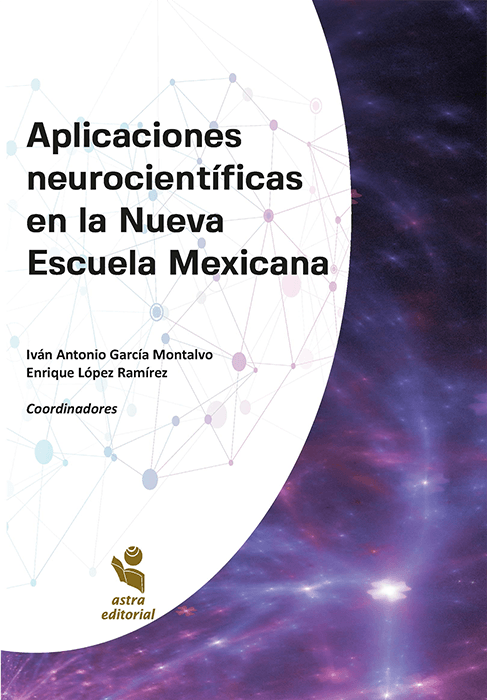
La permanencia escolar en Educación Media Superior (EMS) constituye uno de los principales desafíos del sistema educativo mexicano, particularmente en contextos marcados por la exclusión social y la desigualdad socioeconómica. Durante el ciclo escolar 2023-2024, la tasa de abandono escolar a nivel nacional alcanzó el 11.3 %, mientras que en el estado de Oaxaca se registró un 9.9 %. En este trabajo, analizamos la permanencia escolar como un logro educativo que plantea retos significativos para las instituciones educativas. El fenómeno del abandono no se circunscribe únicamente a entornos rurales; las escuelas urbanas también presentan particularidades que requieren un análisis específico. Realizamos un recorrido teórico por las dimensiones cognitivas, socioemocionales y contextuales desde un enfoque que integra una perspectiva desde la neurociencia y las humanidades. Destacamos la motivación y las funciones ejecutivas como predictores de la persistencia académica. Asimismo, retomamos conceptos fundamentales de la psicología positiva como el sentido de pertenencia y las expectativas de futuro o esperanza.
Referencias
Allen, K. A., Kern, M. L., Vella-Brodrick, D., Hattie, J., & Waters, L. (2021). What schools need to know about belonging: A meta-analysis. Educational Psychology Review, 33(1), 1–34. https://doi.org/10.1007/s10648-020-09583-3
Cubero-Pérez, R., Cubero, M., Matías-García, J. A., & Bascón, M. J. (2024). Learner identity in secondary post-compulsory education students from Areas in Need of Social Transformation: an example of resilience. European Journal of Psychology of Education, 39(2), 535-556.
De Vasconcelos, A. N., Freires, L. A., Loureto, G. D. L., Fortes, G., da Costa, J. C. A., Torres, L. F. F., … & Isotani, S. (2023). Advancing school dropout early warning systems: the IAFREE relational model for identifying at-risk students. Frontiers in Psychology, 14, 1189283.
Deci, E. L., & Ryan, R. M. (2020). Self-determination theory: Basic psychological needs in motivation, development, and wellness. Guilford Press.
Dehaene, S. (2020). How we learn: Why brains learn better than any machine… for now. Viking.
Diamond, A., & Ling, D. S. (2015). Conclusions about interventions, programs, and approaches for improving executive functions. Developmental Cognitive Neuroscience, 18, 34–48. https://doi.org/10.1016/j.dcn.2015.04.006
Ewondo Mbebi, O. (2023). School dropout in Cameroon and its determinants. International Review of Education, 69(5), 691-714.
Gebre, Z. A., Keery, Y. A., & Gemeda, T. T. (2026). Academic engagement and autonomous motivation: a study in South Ethiopia, secondary schools. Cogent Education, 13(1), 2564256.
George, G., Timol, F., Desmond, C., Kane, J., & Davidson, L. L. (2025). Determinants of school dropout in the Asenze cohort study in KwaZulu-Natal, South Africa. Vulnerable children and youth studies, 1-21.
González-Yubero, S., Palomera, R., Mauri, M., & Falcón, C. (2025). The role of resilient coping as a mediator between trait emotional intelligence and academic motivation in university students. Trends in Neuroscience and Education, 100272.
Guzmán Rincón, A. (2025). Dropout in rural higher education in virtual modality: a neural network approach. Cogent Education, 12(1), 2493445.
Hernández, R., Covarrubias, R., Radoff, S., Moya, E., & Mora, A. J. (2024). An anti-deficit investigation of resilience among university students with adverse experiences. Journal of College Student Retention: Research, Theory & Practice, 26(3), 653–676. https://doi.org/10.1177/15210251221112345
Herrera, D., Matos, L., Gargurevich, R., Gómez, M., Lira, B., & Anaya, R. (2025). Cognitive-individual and social-interpersonal protective factors: dual safeguards against dropout intentions in Peru. Cogent Psychology, 12(1), 2581458.
Immordino-Yang, M. H., Darling-Hammond, L., & Krone, C. (2018). The brain basis for integrated social, emotional, and academic development: How emotions and social relationships drive learning. The Aspen Institute.
Lessard, A., Butler-Kisber, L., Fortin, L., & Marcotte, D. (2014). Analyzing the discourse of dropouts and resilient students. The Journal of Educational Research, 107(2), 103-110.
Madarasová-Gecková, A., Tavel, P., & van Dijk, J. P. (2023). Future expectations, school engagement, and adolescent persistence in education. Journal of Adolescence, 95, 45–56. https://doi.org/10.1016/j.adolescence.2022.12.004
Marstoci, E., Romano, L., & Fiorilli, C. (2024). Adolescence as a window of vulnerability and opportunity: Neurocognitive and emotional development in educational contexts. Educational Psychology Review, 36(2), 45–62. https://doi.org/10.1007/s10648-023-09785-4
OECD. (2023). Education at a glance 2023: OECD indicators. OECD Publishing. https://doi.org/10.1787/eag-2023-en
Panadero, E., Järvelä, S., & Bannert, M. (2022). Self-regulated learning and metacognition in education: A review of theoretical models and empirical research. Educational Psychology Review, 34(3), 843–873. https://doi.org/10.1007/s10648-021-09637-3
Pepito, J. L. A., & Paglinawan, J. L. (2025). From risk to resilience: Teacher strategies for supporting students-at-risk of dropping-out [Imagen de un abstract o póster]. Presentado en International Journal of All Research Writings, 6(11). https://www.ijarw.com
Ray, E. C., Oehme, K., Perko, A., Bradley, L., & Yoder-Maina, A. (2025). Adapting After Adversity: Application and Outcomes from Resilience-Based Curricula. Journal of Aggression, Maltreatment & Trauma, 1-19.
re
Secretaría de Educación Pública. (2023). Marco curricular común de la educación media superior. SEP.
Szabó, L., Zsolnai, A., & Fehérvári, A. (2024). The relationship between student engagement and dropout risk in early adolescence. International Journal of Educational Research Open, 6, 100328.
Thorsen, C., Yang Hansen, K., & Johansson, S. (2021). The mechanisms of interest and perseverance in predicting achievement among academically resilient and non-resilient students: Evidence from Swedish longitudinal data. British Journal of Educational Psychology, 91(3), 1085–1103. https://doi.org/10.1111/bjep.12429
Thorsen, C., Yang Hansen, K., & Johansson, S. (2021). The mechanisms of interest and perseverance in predicting achievement among academically resilient and non‐resilient students: Evidence from Swedish longitudinal data. British Journal of Educational Psychology, 91(4), 1481-1497.
van Wyk, M., Mason, H. D., van Wyk, B. J., Phillips, T. K., & van der Walt, P. E. (2022). The relationship between resilience and student success among a sample of South African engineering students. Cogent Psychology, 9(1), 2057660.
Ye, W., Strietholt, R., & Blömeke, S. (2021). Academic resilience: Underlying norms and validity of definitions. Educational Assessment, Evaluation and Accountability, *33*(1), 169–202. https://doi.org/10.1007/s11092-021-09360-0